
RSS

Spooky Sights & Early Skates: Your Halloween Weekend Guide Around YYC (Oct 30 – Nov 1)

It’s finally here Halloween weekend in Calgary! Because October 31st lands on a Saturday this year, the entire city is gearing up for a massive weekend of costumes, haunted houses, and classic late-autumn fun.

Every true Calgarian knows the golden rule of a YYC Halloween: a costume isn't officially complete until you figure out how to layer a thermal shirt underneath it or fit a winter parka over top of it! Whether you are planning a spooky date night, looking for daytime family events, or scouting out the best trick-or-treating blocks in the city, here is your guide to what’s happening around Calgary from October 30th to November 1st.

1. Family-Friendly Daytime & Evening Fun

If you want to soak in the Halloween atmosphere before the trick-or-treating begins or need a great daytime activity for younger kids these classic Calgary events are running this weekend:

  • ZooBoo at the Calgary Zoo (Oct 31 & Nov 1): Dress up the little ones in their favourite costumes and head to the zoo for treat stations, family-friendly Halloween activities, and autumn walks through the exhibits.

  • Pumpkins After Dark at WinSport (Final Nights: Oct 30 & 31): This is the final weekend to walk through the massive outdoor pathway at Canada Olympic Park featuring over 10,000 hand-carved, illuminated pumpkins, live carving demos, and fall treats.

  • 17th Ave SW & Local Neighbourhood Strolls: Several retail districts, including 17th Ave and Historic Inglewood, are hosting daytime trick-or-treating, photo booths, and spooky pop-ups at local shops on Saturday afternoon.

2. Big Scares & Nightlife for Teens and Adults

Looking for real jump-scares or a night out with friends? Calgary has plenty happening after dark on Friday and Saturday night:

  • ScreamFest at Stampede Park (Oct 29, 30 & 31): Taking over the GMC Stadium from 7:00 PM to Midnight, ScreamFest wraps up its 2026 run with six haunted houses, carnival games, monster truck rides, and horror entertainment.

  • Calgary Ghost Walks (Oct 30 – Nov 1): Take a lantern-led evening tour through historic Inglewood, Kensington, or Downtown to hear researched stories of Calgary’s haunted past, including the infamous phantom railway conductor at the Fairmont Palliser.

  • Where the Dark Things Dwell at Heritage Park (Oct 30 & 31): Part interactive escape room and part supernatural storytelling across the darkened historical village.

3. Must-See Community Haunted Houses & Trick-or-Treating (Oct 31)

Saturday Halloween means no rushing home from work or school before heading out the door. Beyond regular trick-or-treating, dozens of Calgary homeowners turn their front yards and garages into incredible community attractions (often collecting donations for the Calgary Food Bank or local charities):

  • End of Days Haunted House (241 Prestwick Circle SE): Returning for its 10th year in McKenzie Towne, this full-garage walkthrough offers a "Low Scare" night on Friday, Oct 30 (6:00–9:00 PM) and a "Full Scare" experience on Halloween night (5:00–10:00 PM) with optional donations for the Calgary Food Bank.

  • Top Trick-or-Treating Strolls: Front-porch communities like McKenzie Towne and Auburn Bay in the SE, or the mature, tree-lined streets of Woodlands, Evergreen, and Cougar Ridge on the west and south sides of the city are always buzzing with incredible yard displays and great neighbourhood energy.

4. Sunday, Nov 1st: Enjoy the Extra Evening Daylight!

Quick reminder for Sunday morning: Don't touch your clocks! With Alberta permanently retiring the seasonal time change, our clocks stay put this Sunday (though it’s worth double-checking your smartphone calendar to make sure an outdated setting didn't shift your Sunday schedule by an hour!).

Instead of it getting pitch black at 4:30 PM on Sunday afternoon like previous Novembers, Calgarians get to keep that late-afternoon daylight. Use the extra sunshine to get outside for a walk through Fish Creek Provincial Park, grab a warm drink at your favourite local café, or start transitioning the front porch from pumpkins to winter planters!


Have a Safe & Fun Halloween, Calgary!

Read

The Pre-Winter Home Equity Audit: 5 Projects That Actually Boost Calgary Resale Value

As October wraps up, there is a big change on the calendar for Albertans: thanks to the move to permanent standard time, November 1st arrives without the annual "Fall Back" clock change. While everyone can celebrate keeping an extra hour of evening daylight and not having to reset the microwave clock the first week of November is still the ultimate deadline for Calgary homeowners to get ahead of winter.

Most fall maintenance checklists tell you to rake your leaves and disconnect your garden hose. That’s great advice, but from a real estate perspective, it pays to look at seasonal prep through a slightly different lens: your home’s resale value and equity.

When you eventually go to sell your home, a savvy buyer and a thorough home inspector aren't just looking at your quartz countertops. They are looking for signs of how the property has handled Calgary’s wild freeze-thaw cycles. Taking care of a few strategic items right now doesn't just keep you warm this winter; it protects your bottom line at the negotiating table.

Here are five winter-prep projects that actually boost and protect your home’s value.

1. The Furnace Tune-Up (And the "Receipt Flex")

Nothing stalls a home negotiation faster than a dusty, unserviced furnace during a property inspection. In Calgary, your heating system works overtime for half the year. Having a licensed HVAC professional clean and service your furnace in the fall is huge not just so it doesn't quit on you at -30°C, but because service logs build buyer confidence.

  • The Equity Play: Have your technician attach a maintenance tag right onto the side of the furnace with the date and company name, and keep the digital invoices in a folder. When buyers see a multi-year paper trail of proactive care, they assume the rest of the house has been maintained to the same standard.

2. Attic Insulation & Ice Dam Prevention

If there is one thing that makes Calgary homebuyers nervous, it’s Chinook winds combined with poor attic ventilation. When heat escapes from your living space into the attic, it melts the snow on your roof, which then refreezes at the cold eaves—creating heavy ice dams that can back water up under your shingles.

  • The Equity Play: Check your attic hatch (or have a pro inspect it) to ensure your insulation is even, your soffit baffles aren't blocked, and your bathroom vents are exhausting outside the roof rather than into the attic space. Fixing heat loss now saves you on monthly utility bills and prevents water-stained ceilings that scare off future buyers.

3. Window Seals vs. Full Replacements

Walk around your home on a sunny afternoon and check your windows. Do you see condensation or a milky fog trapped between the panes of glass? That means the thermal seal has failed and the insulating gas has escaped.

  • The Equity Play: Many homeowners assume they need to spend $20,000+ replacing all their window frames before selling. Often, if your frames are in good shape, you only need to replace the sealed glass units (IGUs) for a fraction of the cost. It immediately restores the energy efficiency of the room and eliminates an automatic deduction on a buyer’s inspection report.

4. Grading & Downspout Extensions

Wait isn't water management a spring problem? In Calgary, the "spring melt" actually happens multiple times in January and February whenever a Chinook rolls over the Rockies. If snow piles up right against your foundation and melts with nowhere to go, it finds its way into basement window wells or hairline foundation cracks.

  • The Equity Play: Before the ground freezes solid, make sure your downspouts are attached and extended at least 4 to 6 feet away from the house, and ensure the soil around your foundation slopes away from the walls. A bone-dry basement is one of the strongest selling points a Calgary home can have.

5. Whole-Home Humidifiers & Smart Thermostats

Ever walk into a home showing in the middle of winter and get hit with static shocks and creaky, shrinking hardwood floors? Calgary winters are famously dry.

  • The Equity Play: Making sure your furnace humidifier has a fresh filter pad and is set properly for the outdoor temperature keeps your hardwood cabinetry, trim, and flooring from cracking or gapping. Pairing that with a clean, modern smart thermostat shows buyers that your home is comfortable, efficient, and turn-key.

Want to Know Where Your Home Equity Stands This Fall?

Whether you’re planning a move in the next six months or staying put for the next six years, treating your home like the major investment it is always pays off. And if you need a trusted local HVAC tech or home inspector referral before the snow flies, we always have great local pros we can connect you with.

Curious how your home’s upgrades and our current fall market have impacted your property’s value? Reach out today for a custom, no-obligation equity evaluation on your home!

Read

Picture Perfect: Great Calgary Spots (and Beyond!) for Viewing Fall Foliage

We have officially entered autumn, and in Calgary, it is short but incredibly scenic. The crisp air is here, and the trees are putting on their annual golden-yellow show. So, if you’re in the mood to treat your senses to the colours of the season, make sure you check out the following spots while you can!

Whether you want a quick city stroll or a rewarding mountain hike, here is your ultimate guide to finding the best fall foliage in and around Calgary.

🍁 Urban Oases: Fall Colours Right in the City

You don't have to leave the city limits to find breathtaking autumn vibes. Calgary's urban parks are some of the best places to see the changing leaves.

Rotary Park

Right above the Centre Street bridge, Rotary Park offers breathtaking views of the downtown skyline framed by vibrant autumn trees. You can sit on one of the benches surrounded by falling yellow leaves and just take it all in. If you want to make it a family outing, the park features an accessible playground and an off-leash area, so all members of the family (two-legged and four-legged) can join in the fall fun.

Prince's Island Park

Named after Peter Anthony Prince, the founder of the Eau Claire Lumber Mill, this park offers the perfect combination of city and nature. Located right in Downtown Calgary, it is the ultimate spot for a romantic walking date, a pumpkin-spice-latte stroll, or a fall photoshoot. The park features picnic tables, a playground, picturesque bridges, and you can even warm up by stopping at the River Café, one of Canada’s best restaurants nestled right among the trees.

Bowness Park

Whether you’re looking for a scenic run beneath a canopy of yellow or planning a cozy picnic day, Bowness Park is the right choice. As one of Calgary’s most beloved parks, Bowness offers two kilometres of pathways winding along the Bow River. It has numerous picnic sites, shelters, fire pits, and BBQ stands if you want to gather with the whole family and roast some marshmallows on a crisp fall afternoon.

Fish Creek Provincial Park

Spanning 19 km, Fish Creek Provincial Park is the second-largest urban park in Canada (after Rouge National Urban Park in Toronto). It’s a fan favourite throughout the year, but the mesmerizing colours of the fall elevate it to an entirely new level. You can enter through Marshall Springs for relaxing trails and hilltop views, Bannister Road for a laid-back route, or Shannon Terrace, which offers some of the most stunning, densely forested pathways right along the creek.

Nose Hill Park

If getting your heart rate up is your goal this season, this park covers over 11 square kilometres and has numerous hiking trails and dedicated off-leash areas for your furry friends. Come for the fall foliage in the coulees, but stay for the mesmerizing panoramic views of the Rocky Mountains, Bow River Valley, and sweeping plains. At Nose Hill, you might even spot wildlife like deer and coyotes. (Just remember: coyotes are not a threat to people but should be treated with respect. Never approach or feed them!)

🏔️ Beyond the City: The Magic of Larch Season

If you have a vehicle and a free weekend, you absolutely must experience "Larch Season." For a few fleeting weeks in late September and early October, Alpine Larch trees—unique conifers that lose their needles—turn a brilliant, glowing gold before dropping their needles for winter.

Here are three incredible larch hikes just a short drive from Calgary:

Ptarmigan Cirque (Kananaskis Country)

Difficulty: Moderate | Distance: ~4.5 km round trip Located at Highwood Pass (the highest paved road in Canada), you start at an elevation that gets you into the alpine almost immediately. After a steep but short initial climb, the trail opens up into a stunning glacial bowl filled with glowing golden larches. It’s one of the most family-friendly larch hikes in the Rockies, offering maximum reward for moderate effort.

Chester Lake (Kananaskis Country)

Difficulty: Moderate | Distance: ~9 km round trip A staple for Calgary hikers, the trail to Chester Lake is beautiful year-round, but it truly shines in the fall. After hiking through a dense pine forest, the trail flattens out into an expansive meadow dotted with golden larches, all reflecting beautifully off the pristine waters of Chester Lake, with the towering Mt. Chester in the background.

Larch Valley (Banff National Park)

Difficulty: Hard | Distance: ~8.6 km round trip This is the most famous larch hike in the world for a reason. Starting at the iconic Moraine Lake, you'll endure a series of steep switchbacks that eventually lead you into the spectacular Larch Valley. You will be entirely surrounded by a sea of gold with the dramatic Ten Peaks towering above you. (Note: You must book a park shuttle or use ROAM transit to access Moraine Lake, as the road is closed to personal vehicles!)

🎒 Quick Tips for Fall Foliage Viewing:

  • Dress in layers: Calgary and mountain weather can change in a flash. Bring a cozy sweater and a windbreaker.

  • Bear safety: If you venture into Kananaskis or Banff for the larches, always carry bear spray, know how to use it, and travel in groups. Bears are actively feeding this time of year to prepare for hibernation!

  • Go early: Larch hikes and popular city parks get incredibly busy on fall weekends. Arrive early to secure parking and enjoy the peaceful morning light.

Read

Calgary Real Estate Update: Shifting Sands in the Fall Market (September 2026)

As the crisp autumn air settles over Calgary, our real estate market is experiencing a fascinating shift. If you are planning to buy or sell before the end of the year, understanding the nuances of the current landscape is critical. The Calgary Real Estate Board (CREB) just released their highly detailed September 2026 figures, and the overarching theme is a market divided by property type.

Overall, the city recorded 1,650 sales in September. While this is nearly 4% lower than what we saw in September 2025, it successfully matched August's pace, defying the typical seasonal slowdown we expect as summer ends. Because new listings also rose alongside those steady sales, the sales-to-new-listings ratio fell to 49%. This helped keep overall inventory stable, leaving the city with just under four months of supply.

The Core Issue: Where is the Construction Happening?

To understand why the market feels so different depending on what you are trying to buy, we have to look at construction. As CREB Chief Economist Ann-Marie Lurie explained, the construction boom over the last three years has been heavily focused on higher-density sectors, specifically apartments and row-style homes.

Because we didn't see the same massive surge in single-family home construction, the detached market is still holding steady. Our job market remains robust, and while net migration has slowed, it’s still positive. This means there are plenty of buyers absorbing the available detached homes, but the sheer volume of new high-density units hitting the market has tipped the scales for condos and townhouses, putting downward pressure on their prices.

Here is the detailed breakdown of exactly what is happening in each segment of the market:

1. Detached Homes: Steady and Balanced

Detached homes were the strongest performer in September. A boost in new listings actually helped drive sales up to 896 units—a 4% increase over last year.

  • Market Balance: With a sales-to-new-listings ratio of 52% and supply sitting at just over three months, this sector remains in balanced territory.

  • Regional Differences: It’s vital to know your quadrant. The North West, West, and South districts are quite competitive, sitting at less than three months of supply. Conversely, the North East is oversupplied, nearing six months of supply.

  • Prices: The unadjusted benchmark price is $566,700 (down 1% year-over-year). This slight drop is primarily due to steep pullbacks in the oversupplied North East, East, and North districts, while prices in the City Centre and West districts actually increased compared to last year.

2. Semi-Detached: Cooling from Early 2026 Highs

While we saw a healthy amount of sales in September, it wasn't quite enough to make up for earlier lags. Year-to-date sales for semi-detached homes (1,678 total) are down about 2% compared to last year.

  • Market Balance: A solid influx of new listings in September dropped the sales-to-new-listings ratio to 45%. This bumped the months of supply up to nearly four months. This is a noticeable shift away from the tight, highly competitive conditions we saw earlier in 2026.

  • Prices: The unadjusted benchmark price currently sits at $685,200. While prices trended down slightly this month, it was mostly in line with typical seasonal behavior, leaving prices very comparable to this time last year.

3. Row / Townhouses: Inventory is Climbing

Buyers looking for row homes will be pleased to see more options hitting the market. Sales eased up compared to August, while new listings climbed, dropping the sales-to-new-listings ratio to 45%.

  • Market Balance: For the first time since the beginning of the year, the months of supply for row homes has risen above four months. Resale homes are facing stiff competition from brand-new builds, as the price gap between the two remains unusually narrow.

  • Prices: The unadjusted benchmark price is $412,400, which is down nearly 6% from last year. The steepest discounts are happening in the North East and East districts (dropping more than 11%), while the North West is holding strong with only a 2% decline.

4. Apartment Condominiums: A Strong Buyer's Market

The condo market continues to feel the heavy weight of excess supply. While 343 sales in September helped slow the year-over-year decline to 14%, there were a staggering 717 new listings added to the mix.

  • Market Balance: The sales-to-new-listings ratio is at 48%. While the slight bump in sales prevented inventory from rising further, supply remains high at just above five months.

  • Prices: The excess supply has weighed heavily on prices all year. The unadjusted benchmark price fell to $291,400. That’s a 1% drop from August, and an 8% drop compared to last September.

Regional Market Spotlights

If you are looking just outside the city, the surrounding communities are experiencing varying degrees of shifting inventory:

RegionBenchmark PriceYear-Over-Year Price ChangeMonths of SupplyMarket Highlights
Airdrie$505,800-4%4 MonthsYear-to-date sales are down 13%. Increased competition from new builds and surrounding markets is weighing on demand, especially for higher-density homes.
CochraneStableFlat YoY5 MonthsDespite a monthly pullback, YTD sales are up nearly 6%. Notably, 30% of this year's listings are new builds. The sales-to-listing ratio dropped to 42%—the lowest since January.
Okotoks$606,800Flat YoY2+ MonthsThe tightest market in the region. The sales-to-listings ratio dropped to 76% (down from 80%+ in previous months). Conditions remain highly competitive.
Chestermere$690,200Flat YoY<6 MonthsSales rose to offset a wave of new listings. The sales-to-listings ratio is low at 38%, but overall inventory dipped from August.

Whether you are looking to secure a detached home in the competitive West district, or hoping to take advantage of the growing inventory in the townhouse sector, the key takeaway from September's data is that broad generalizations no longer apply to Calgary real estate.

Click here to view the full City of Calgary monthly stats package.

Click here to view the full Calgary region monthly stats package.

Data and insights provided by the Calgary Real Estate Board (CREB®) and the CREB®Now blog. Information is deemed reliable but is not guaranteed.

Read

Renting vs. Owning in Calgary: The Honest Truth About Building Wealth

If you spend enough time on personal finance forums, you will inevitably stumble across a growing trend: the argument that renting is financially superior to owning. The logic usually goes something like this: “If I rent, my monthly costs are lower, I don’t have to pay for a new roof, and I can just invest my down payment into an ETF and come out ahead.”

On paper, in a perfect vacuum, the math can sometimes look competitive. Renting offers unmatched flexibility, and investing in the stock market is a proven wealth-building strategy.

But real life doesn't happen on a spreadsheet. When we look at how housing costs, inflation, tax incentives, and human behavior actually work over a 5 to 10-year horizon, homeownership consistently comes out on top. As a local Calgary realtor who sees the math behind these decisions every day, here is a deep dive into why owning a home remains the ultimate wealth-building tool for the average family.

1. The Power of Leverage and "Forced Savings"

The most common argument for renting is the "invest the difference" strategy. If renting costs $2,500 and owning costs $3,000, the renter can theoretically invest that $500 difference into the stock market every single month.

The problem? Most people don't actually do it. Human nature gets in the way, and that $500 often gets absorbed into lifestyle inflation, vacations, or upgrading vehicles. A mortgage, on the other hand, acts as an automatic, forced savings account. Every time you make a mortgage payment, a portion of it goes directly toward paying down your principal. You are effectively paying your future self.

Furthermore, real estate allows you to use leverage. If you put 5% down on a $500,000 home ($25,000) and the home appreciates by a conservative 3% in one year, your home gains $15,000 in value. That is a 60% return on your actual cash invested. You simply cannot get that kind of leveraged return in an ETF without taking on massive, high-risk margin debt.

2. The Opportunity Cost: What if I Invest My Down Payment?

Renters often point out that if they buy, their $25,000 to $100,000 down payment is "trapped" in the house instead of earning 7% in the stock market.

While it's true your down payment is tied up, Canadian homeowners have massive government incentives that offset this:

  • The Principal Residence Exemption: When you sell your primary home in Canada, 100% of the profit is tax-free. If you make $150,000 in the stock market, you will pay capital gains tax. If your house goes up $150,000, every single penny goes into your pocket.

  • The FHSA and HBP: The Canadian government actively helps you save that down payment. The First Home Savings Account (FHSA) allows you to save up to $40,000 completely tax-free, while the Home Buyers' Plan (HBP) lets you borrow up to $60,000 from your RRSP.

3. Fixing Your Cost of Living in an Inflating World

When you sign a lease, your housing costs are at the mercy of the market. In provinces like Alberta where there is no rent control, landlords can increase rent to match market demand at the end of every lease term. Calgary alone has seen significant rent increases over the last few years.

When you secure a mortgage, you fix the largest line item in your budget. Yes, property taxes and insurance will inch up, and in Canada, mortgages must be renewed every 1 to 5 years at current interest rates. However, as the years go by, your principal balance shrinks. Ten years into a mortgage, your payments are servicing a much smaller debt, while the renter down the street is paying 10 years' worth of compounded rent increases.

4. The 10-Year Math: Equity vs. Sunk Costs

Let’s look at a realistic 10-year scenario. Assume you buy a $500,000 home with 5% down versus renting a similar home starting at $2,500/month (with a conservative 3% annual rent increase).

The 10-Year ScenarioThe RenterThe Homeowner
Housing Payments MadePays over $343,000 in rent to a landlord.Pays the mortgage (part interest, part principal).
Rent IncreasesRent grows from $2,500 to over $3,200/mo.Monthly payments are largely stabilized.
Debt Reduction$0.Pays off roughly $115,000 of the mortgage principal.
Property Appreciation$0.Assuming a conservative 3% growth, home is now worth $671,000.
Total Wealth Created$0 (Housing costs were a 100% sunk cost)$286,000+ in total equity (Appreciation + Principal Paid).

Note: This does not factor in property taxes or maintenance, but even after subtracting those, the homeowner is hundreds of thousands of dollars ahead.

5. The "Maintenance Money Pit" is Overstated

Renters often point to home maintenance as the ultimate dealbreaker. "What if the furnace breaks? What if the roof leaks?"

Maintenance is a reality of homeownership, but it is rarely the catastrophic annual drain it’s made out to be. High-ticket items like a roof or a furnace typically have lifespans of 15 to 25 years. You do not replace them constantly. In many cases, the biggest unexpected expense a homeowner might face over a multi-year span is a $2,000 appliance upgrade. The rest is often made up of minor trips to the hardware store for basic upkeep.

6. The Calgary Advantage

While real estate dynamics change depending on where you live, buying in Calgary offers distinct advantages over other major Canadian cities:

  • No Land Transfer Tax: Buying a home in Toronto or Vancouver requires tens of thousands of dollars upfront just in taxes. In Alberta, you only pay nominal land title registration fees, keeping your cash in your pocket.

  • The "Infinite Land" Myth: You will often hear that Calgary has "infinite land" to build on. While the city is surrounded by prairie, converting acreage into zoned, serviced, and constructed communities takes years of municipal approvals and development. This bottleneck ensures that existing housing supply retains its value.

  • Pets and Freedom: Calgary has a famously competitive rental market for pet owners. Finding a rental that allows a dog—without charging exorbitant non-refundable pet fees or monthly "pet rent"—is incredibly difficult. When you own your home, your furry family members are always welcome, and you have complete freedom to renovate and design your space.

So, When Should You Rent?

Real estate is a long-term game. If your job is highly volatile, you are testing out a brand new city, or you plan on moving again in less than 3 to 4 years, renting is absolutely the right call. The transaction costs of buying and selling real estate (realtor fees, legal costs, moving) will wipe out your equity gains if you flip properties too quickly.

But if you are putting down roots and looking at a 5-to-10-year horizon, the math is clear. Buying a home isn't just about having a place to paint the walls whatever color you want—it is the financial bedrock of the Canadian middle class.

Are you trying to decide if it's the right time to make the leap from renting to owning?

Every situation is unique, and having the right advice makes all the difference. Reach out to the Nasiri Property Group today. We’d love to sit down, run through your specific numbers, and help you build a personalized strategy for your real estate goals.

Read

To Reno or Not to Reno? Upgrades That Actually Pay Off

We have all been there. You binge-watch three hours of a home improvement show, and suddenly you are convinced that knocking down a load-bearing wall to create an "open concept flow" is a completely reasonable weekend project.

As a homeowner, the urge to upgrade is constant. But before you grab a sledgehammer or max out your credit card on custom Italian tile, you need to ask yourself one very important question: Am I doing this for me, or am I doing this for my home's equity?

There is a massive difference between projects that bring you personal joy and projects that actually yield a return on investment (ROI) when it comes time to sell. If your goal is to boost your property value in the Calgary market, here is a practical guide to the upgrades that actually pay off and the ones that might just be a money pit.

1. The Undisputed Champions: Kitchens and Bathrooms

You have probably heard it before, and it remains absolutely true: kitchens and bathrooms sell houses.

Buyers want to see clean, modern, and highly functional spaces in these two areas. However, this does not mean you need to gut the entire room. In fact, major, high-end overhauls often don't recoup their full cost.

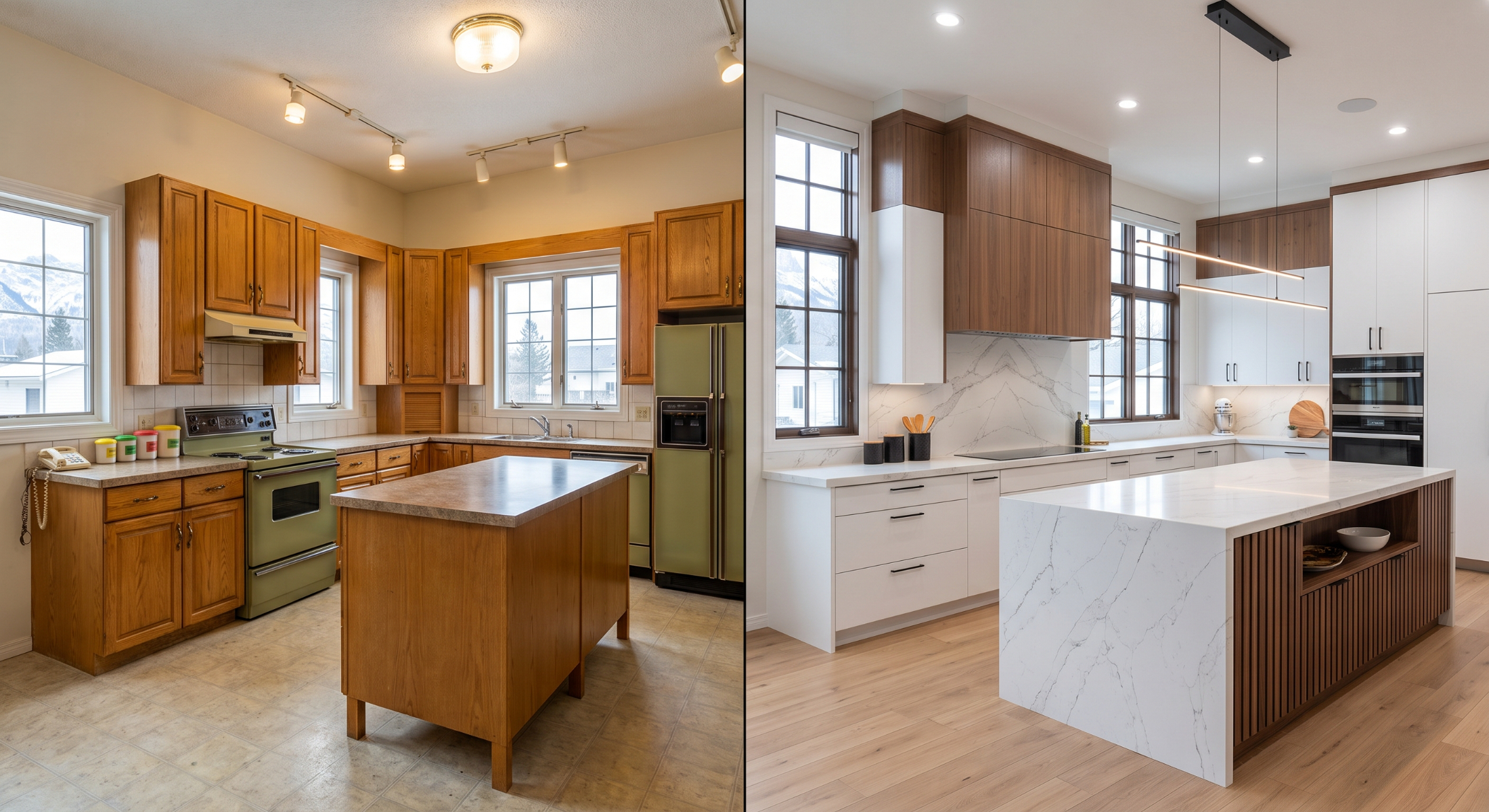
  • The Smart Play: Focus on a "minor" remodel. Paint or reface existing cabinets, upgrade the hardware, install a new, stylish backsplash, and replace aging countertops with quartz or durable granite.

  • The DIY Warning: Leave the plumbing and electrical to the professionals. A leaky DIY sink installation will erase your equity faster than you can say "water damage."

2. The Cheapest Magic Trick: Fresh Paint

If you want the absolute highest return on a very minimal investment, buy a few cans of high-quality paint.

When we are evaluating a home's listing potential, one of the first recommendations we almost always make is a fresh coat of neutral paint. It instantly erases years of scuff marks, neutralizes the space, and makes the entire house feel brighter and cleaner.

  • The Smart Play: Stick to warm whites, soft grays, or light "beige." You are creating a blank canvas for the next buyer's imagination.

  • The DIY Warning: If you have a highly specific, vibrant accent wall (like lime green or deep purple), paint over it before listing. You might love it, but a potential buyer just sees a chore they have to do when they move in.

3. Curb Appeal (The First Impression)

Buyers judge your house before they even put their car in park. If the outside looks tired, they will inherently assume the inside has been neglected, too.

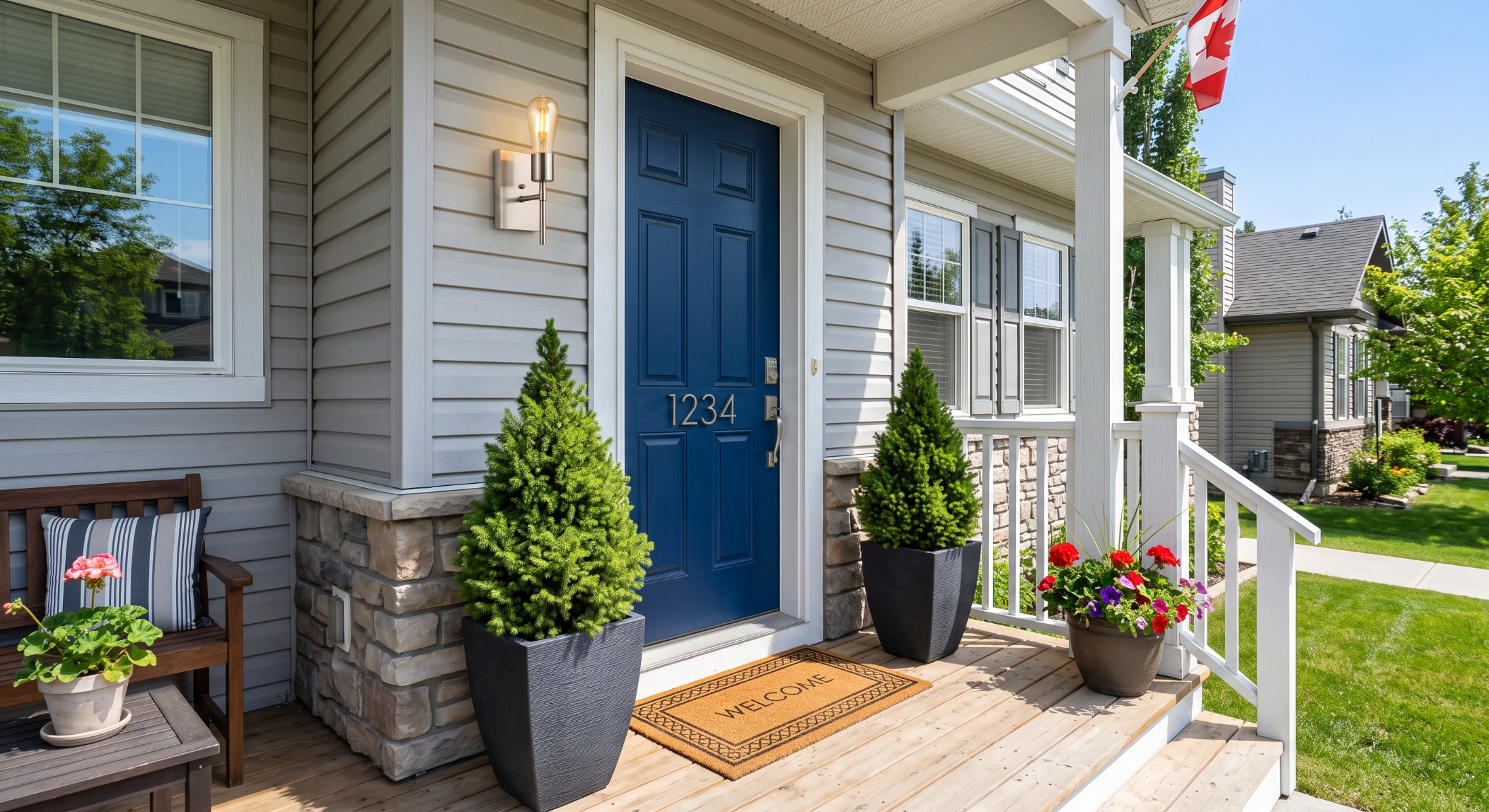
  • The Smart Play: Upgrade your front door (or give it a fresh, bold coat of paint), replace tarnished house numbers, update the exterior lighting fixtures, and ensure the landscaping is tidy. If your garage door looks like it has been in a minor altercation with a hockey puck, fixing or replacing it is a high-yield upgrade.

4. The "Personal Joy" Projects (Low ROI)

Now, let's talk about the renovations that you should only do if you plan to enjoy them for years to come, because buyers likely won't pay a premium for them.

  • The Hot Tub or Pool: In Calgary, an outdoor pool is often viewed by buyers as a massive maintenance headache rather than a luxury. Hot tubs are great, but they rarely add tangible dollar value to the appraisal.

  • Highly Specific Hobby Rooms: Converting your garage into a fully soundproofed recording studio or permanently turning a bedroom into a massive walk-in closet might be your dream, but it drastically shrinks your pool of potential buyers.

  • Over-Upgrading for the Neighborhood: If you live in a starter-home neighborhood, putting $80,000 into a luxury, chef-grade kitchen won't make your house worth $80,000 more than your neighbor's. The market always caps the value based on the surrounding comparables.

The Bottom Line

Not every renovation needs to be a strategic financial maneuver. If a basement arcade room brings you and your family immense happiness, build it! Just understand that you are investing in your lifestyle, not necessarily your property value.

Thinking of Making a Move or Making a Change?

If you are debating whether to renovate your current space or simply pack up and find a home that already has the upgrades you want, let's chat. The Nasiri Property Group can run a quick comparative market analysis to show you exactly what your home is worth today, and what it could be worth with a few strategic tweaks.

Read

From the Court to the Cul-de-Sac: How Community Sports Shape a Neighborhood

When you're shopping for a home, it is easy to get caught up in the property lines, the square footage, and whether or not the kitchen has that highly coveted gas range. But once the moving boxes are recycled and the new paint is dry, the actual value of where you live is often determined by what happens outside your front door.

If you want to know the true heartbeat of a neighborhood, don't look at the property taxes. Look at the local rec centers on a Saturday morning.

Community sports are the unsung heroes of real estate. Here is why the local soccer fields, basketball courts and flag football fields do more for your property value and your quality of life than any kitchen renovation ever could.

1. The Sideline Syndicate (Where the Real Networking Happens)

You can live next to someone for five years and never learn their last name if your only interaction is a polite nod while taking out the trash. But the moment you find yourself standing on the sidelines at Seton South Field, holding a lukewarm coffee and shivering through a brisk spring morning, you are instantly bonded.

Youth sports force us out of our living rooms and into the community. Whether we’re cheering on our daughter as she drives down the basketball court or trying to run a cohesive flag football practice for our son and his teammates, the sidelines are where the neighborhood actually gets built. It’s where you find out which local mechanic to trust, who the best plumber is, and which houses are secretly getting ready to hit the market.

2. Proximity to Play (The Amenity Premium)

When buyers ask us to evaluate a neighborhood, one of the first things we look at is the proximity to major community hubs.

Having access to top-tier facilities like the Seton YMCA doesn't just give you a place to work out; it creates a gravitational pull for families. Homes located within walking distance or a short drive to comprehensive rec centers, well-maintained fields, and community rinks historically hold their value better and sell faster. Buyers are completely willing to pay a premium for the convenience of not having to commute forty-five minutes across the city just to get to a 7:00 AM practice.

3. The Volunteer Fabric

A neighborhood is only as strong as the people willing to invest their time into it. Anyone who has ever stepped up to coach a youth sports team knows it is roughly 10% tactical strategy and 90% trying to herd highly energetic cats.

It takes a village and usually a dedicated coach to help keep the chaos in check to run these leagues. But that volunteer spirit bleeds into the rest of the community. Areas with high participation in local sports leagues tend to have more active community associations, better-maintained parks, and a stronger collective voice when it comes to city planning and neighborhood safety. When people invest in the kids, they are inherently investing in the neighborhood.

4. The Cul-de-Sac Carryover

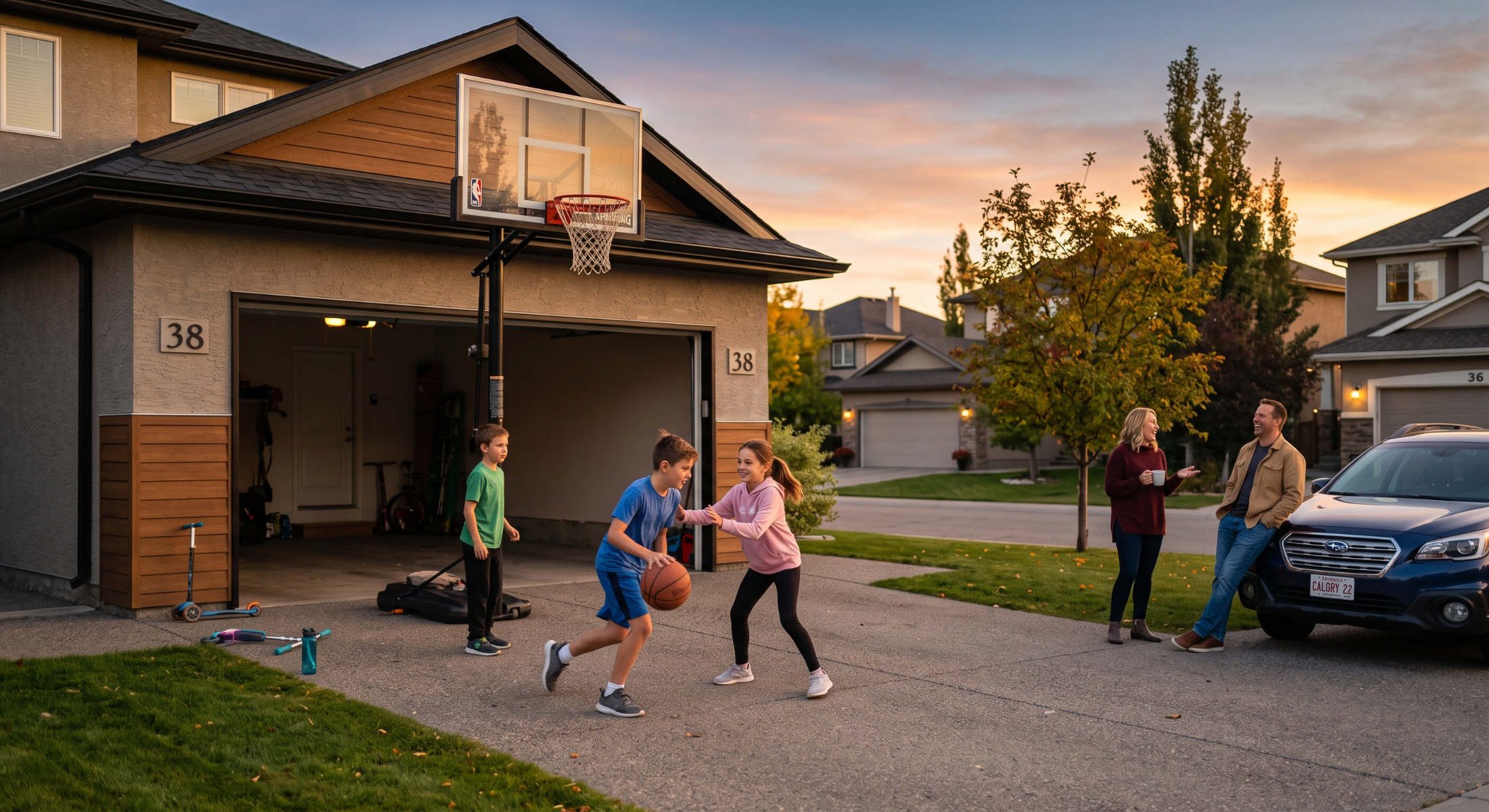
The beautiful thing about community sports is that the game rarely ends when the final whistle blows. It carries over. The kids who meet on the flag football team end up riding their bikes together after school. The driveway basketball hoop becomes a central gathering spot for the entire block. Suddenly, your street isn't just a row of houses; it’s an active, vibrant environment where neighbors actually look out for one another.

The Final Whistle

When you are hunting for your next home, take a drive through the community on a weekend. Look for the crowded soccer fields, the busy basketball courts, and the packed rec center parking lots.

Those aren't just signs of traffic; they are signs of life. And when it comes to making a long-term investment in your family's happiness, a vibrant, connected community is the ultimate home-court advantage.

Read

Paws and Property: A Dog-Lover’s Guide to Calgary Real Estate

Calgary is genuinely one of the most dog-friendly cities you can live in, boasting over 160 public off-leash areas for our four-legged friends to enjoy. But finding the right house when you have a dog requires an entirely different lens.

When your mornings involve wrangling a high-energy puppy down the beautiful Cranston Ridge trail, you quickly realize that a house isn't just a living space for you. It's an indoor dog park that you happen to pay a mortgage on.

If you are house-hunting with a canine companion in mind, here is what you actually need to look for to keep your sanity, your deposit, and your floors intact.

1. The Scratch Factor (Flooring is Everything)

We all love the look of original, pristine hardwood floors. Do you know who else loves them? Your dog, right before they get the "zoomies" and do a full four-paw burnout around your kitchen island.

When touring homes, pay close attention to the flooring.

  • Luxury Vinyl Plank (LVP): This is the holy grail for pet owners. It is waterproof, highly scratch-resistant, and looks almost identical to real wood.

  • Tile: Great for entryways and bathrooms, and it gives your dog a cool place to sleep during those hot Calgary summers.

  • Carpet: If a house is wall-to-wall white carpet, you either need to budget for an immediate renovation, or budget for a professional carpet cleaner to move in with you.

2. The Decontamination Zone (Mudrooms and Dog Washes)

Spring in Calgary means melting snow, which inevitably means mud. Without a proper drop zone, your dog will bring the entire outdoors into your living room.

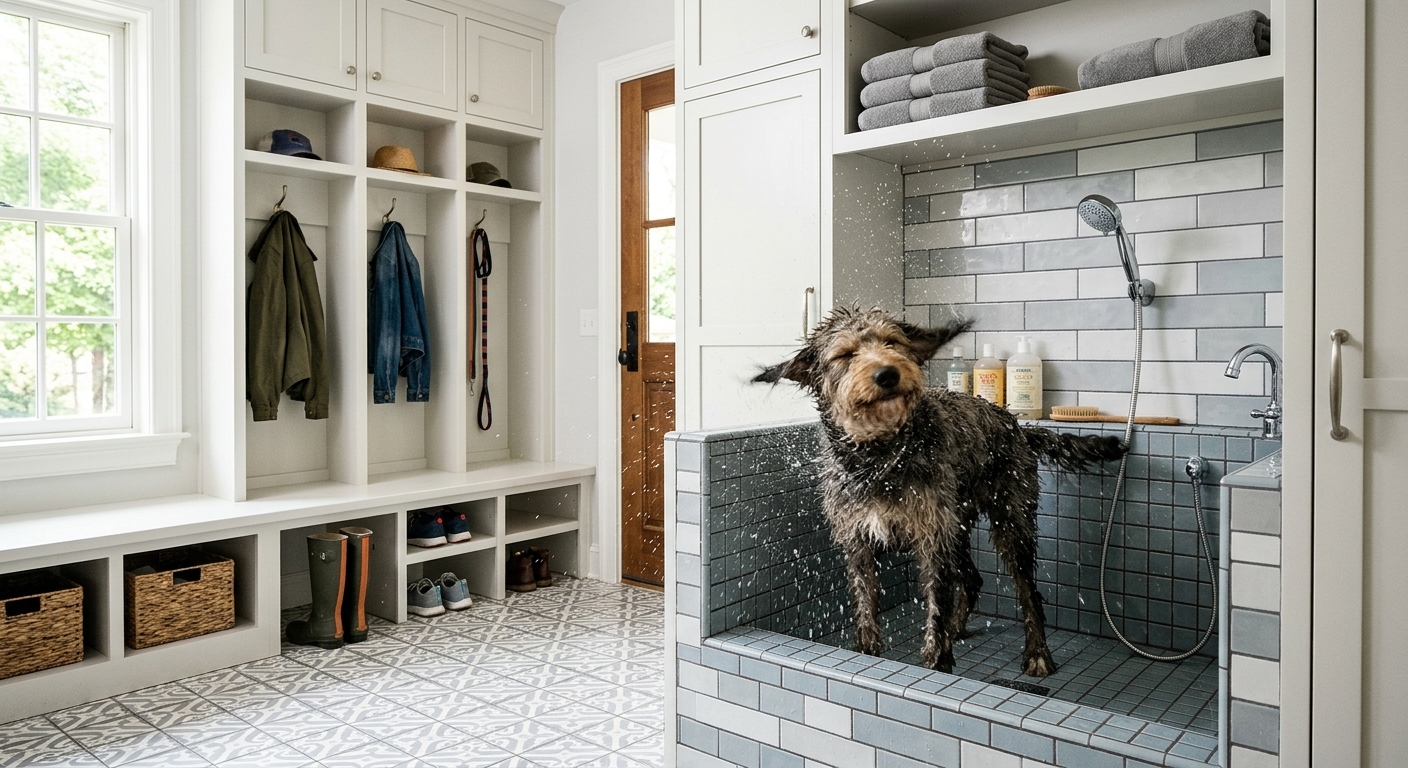
A dedicated mudroom is a massive selling feature for pet owners. Even better? A house with a built-in dog washing station in the mudroom or garage. Having a space with a tiled floor, a floor drain, and a handheld shower nozzle where you can hose off the grime before your dog jumps on the couch is a luxury that will change your life. If a house doesn't have one, look for utility rooms or spacious entryways that have the plumbing potential to add one later.

3. The Perimeter Defense (Fencing)

A "fully fenced yard" in a listing description can mean a lot of things. To a dog owner, it means peace of mind. But you need to inspect the perimeter.

Is it a sturdy, six-foot solid wood or vinyl fence, or is it a four-foot chain-link fence that your athletic Husky will view as a minor hurdle? Look for gaps under the fence line, broken boards, or latching issues on gates. If the yard isn't properly secured, factor the cost of upgrading the fence into your initial buying budget.

4. Location, Location, Location (Proximity to the Parks)

A massive backyard is great, but nothing beats living near an incredible off-leash park or pathway system. Calgary has some of the largest off-leash provisions in North America. Finding a neighborhood that matches your dog's energy level is just as important as the house itself:

  • For the Social Butterfly: If you buy in South Calgary, you might want to be near Sue Higgins Park. It features 62 hectares of space and is the largest fenced off-leash area in the city, complete with Bow River access.

  • For the Endless Explorer: Homebuyers in the Northwest are drawn to Nose Hill Park. With 11 square kilometers of native prairie grassland and sweeping trails, it is perfect for high-energy dogs that love a long hike.

  • For the Family Pack: Southeast neighborhoods like Auburn Bay offer fantastic local off-leash spaces and pathways that are perfect for evening strolls with the family and the dog in tow.

The Final Verdict

Buying a home with your dog in mind doesn't mean sacrificing your own style or comfort. It just means prioritizing durable finishes, smart layouts, and a neighborhood that supports your daily routine. Because at the end of the day, when you're relaxing in your new living room and your exhausted, happy dog is asleep at your feet, you'll know you made the right move. Even if they did track a little bit of mud onto the rug.

Ready to Find Your Dog’s Dream Home?

If you're looking for a property that checks all the boxes for both your family and your four-legged best friend, reach out to the Nasiri Property Group today. Whether you need a massive, secure yard or a mudroom built to handle the Calgary spring thaw, we’re here to help you navigate the market and find the perfect fit. We know exactly what pet owners need to look for and Meg (our Doodle) is always happy to give our favorite local trail recommendations two paws up.

Read

The Homebuyer’s Quest: Why House Hunting is Basically a Tabletop Adventure

If you’ve ever spent an entire evening arguing over encumbrance limits, debating whether to split the party (never split the party), or rolling a critical fail on a perception check (you didn't notice the wet spot on the ceiling), then you already possess the core skills needed to buy a house in today's market.

Seriously. Acquiring real estate is the ultimate quest. It requires strategy, resource management, teamwork, a resilient liver, and the ability to pivot when you unexpectedly encounter a major hazard, like a low-ceiling basement that attacks your height requirement.

Here is why your real estate journey is the ultimate tabletop campaign, and how to build the perfect adventuring party to defeat the final boss: the dreaded Closing Day.

1. The Mortgage Broker (The Party Cleric)

You need healing. Specifically, your bank account needs healing. The Broker is your party Cleric. When the initial costs of the campaign try to deplete your vitality, they cast "Financial Restoration" and provide you with the most crucial spell in the game: Pre-Approval. They tell you exactly how much 'health' (budget) you have and make sure your campaign doesn't bleed out before you reach the final level.

2. The Real Estate Agent (The Party Ranger/Rogue/Bard)

This is your guide, the experienced Multi-Class Ranger/Ranger/Bard who knows the treacherous terrain of the Calgary quadrant. They spot "hidden traps" (bad flips), have a high perception skill for seeing through "illusions" (creative staging), and possess the charisma to negotiate successfully with hostile NPCs (Sellers and their Representatives). If there’s a secret door (a pocket listing), they’re the one who finds it.

3. The Home Inspector (The Party Paladin/Dwarf)

This is your tank. The Home Inspector wields a flashlight and a thermal camera like a blessed warhammer. They have a passive "Detect Evil" ability that works exclusively on plumbing, electrical panels, and foundations. Their job is to crawl into the darkest, spider-infested spaces to ensure there are no ancient curses (asbestos) or slumbering demons (black mold) waiting to doom your party.

4. The Real Estate Lawyer (The Party Wizard/Scribe)

You need someone who can read the ancient, forbidden texts known as the Title and Real Property Report. The Lawyer is your high-level Wizard/Scribe. They decipher the complex magical runes, identify dangerous magical wards (easements), and cast protective spells to prevent ancient spirits (liens) from haunting your ownership. When the final encounter demands signing a hundred magically binding scrolls, the Wizard-Lawyer handles the mana expenditure.

Phase 2: The Quest Board (Scrolling the Listings)

This is the point in the campaign where you sit in the local tavern (your couch at 11:30 PM), drink copious amounts of ale (coffee), and stare at the quest board (your phone). You are looking for main quests ("3 Bedroom Bungalow") while trying to avoid obvious traps ("Charming fixer-upper!" usually translates to: "Currently on fire, enter at own risk").

Phase 3: The Dungeon Crawl (Showings)

You’ve accepted the quests. Now, the dungeon crawl begins.

Walking into an a showing is unpredictable. You may find yourself exploring a magnificent palace (a newly renovated infill), or you might open a basement door and feel a sense of dread that suggests the current owners are cultivating a portal to the abyss.

During the crawl, your entire party’s perception is active. You are searching for treasure (a well-maintained furnace, a sunny south-facing yard) while your Paladin-Inspector rolls saving throws against hazards (bizarre DIY electrical work, a crack in the foundation large enough to swallow a goblin).

This is also where the DM (market conditions) loves to surprise you with a 'Random Encounter.' You arrive at a quaint 3-bedroom, only to find twenty other adventuring parties (buyers) waiting outside. Now it's a dungeon race.

Phase 4: Rolling for Initiative (The Offer)

You found it. The Home Base. The Sanctum. Your Cleric confirms you have the gold, and your Ranger confirms the location is viable. It’s time to strike.

Writing an offer is pure combat strategy. The market usually dictates whether you get a surprise round.

Are you fighting in a Buyer's Market? Congratulations, you have advantage on your attack rolls, and you can add modifiers like property inspection conditions.

Are you fighting in a Seller's Market? You just rolled initiative, but the dragon (the seller) automatically goes first, and they roll with advantage.

Your Ranger/Bard (Realtor) now uses their 'Charisma' skill to charm the seller, and you roll the die. A multiple-offer scenario is essentially rolling a natural 20 or natural 1. You either win the dungeon, or you limp back to the tavern to heal.

Phase 5: The Boss Battle (Clearing Conditions)

You thought getting the offer accepted was the final boss? Oh, sweet summer child. That was just the mini-boss. Now you enter the most perilous, high-stakes stage of the campaign: the Condition Period.

This is an all-out, timed boss battle where the countdown clock is ticking (usually 7 to 10 days) and every member of your party must deploy their ultimate abilities at the exact right moment to survive.

Here is how the battle breaks down:

  • The Paladin (Inspector) Charges In: The Inspector descends alone into the dungeon (the crawlspace and attic) to battle the elemental forces of moisture, structural integrity, and faulty wiring. They return with a detailed battle report of every weakness the house possesses, allowing the party to decide if the boss is too dangerous to fight, or if they need to negotiate for a potion of repair.

  • The Cleric (Mortgage Broker) Channels the Bank Gods: While the Inspector fights physical demons, the Broker fights financial ones. They are relentlessly chanting the sacred incantations of "Income Verification" and "Appraisal Approvals," communing with the notoriously fickle Bank Overlords to secure the holy seal of unconditional financing before the clock strikes zero.

  • The Wizard (Lawyer) Dispels the Curses: The Lawyer steps in to pore over the ancient texts of Condo Documents, Real Property Reports, and Titles. They are actively casting "Dispel Magic" on any hidden covenants, unpaid property taxes, or encroaching fence lines that threaten to place a permanent curse on your future dominion.

  • The Bard/Rogue/Ranger (Realtor) Manages Aggro: Your Real Estate Associate is the battlefield commander. While the rest of the party is deep in their respective fights, the Realtor handles the backend chaos. They are dodging area-of-effect attacks (delays from the lender), constantly communicating with the seller's guild (listing agent), renegotiating the terms based on the Paladin's inspection report, and keeping the entire party buffed and synchronized so no one misses a deadline.

If anyone fails their saving throw during this phase, the deal collapses and the party is wiped. But if everyone executes their role flawlessly? You sign the waiver, remove the conditions, and the boss is finally defeated.

Phase 6: Claiming the Loot (Closing Day)

You survived the battle. The conditions are cleared, the title is pristine, and the funds have been magically transferred. You’ve already gathered at the Wizard’s tower (the lawyer’s office) to sign the final binding scrolls. You meet your Multi-Classed Realtor at the Sanctum and are handed the ultimate, legendary loot: The Keys.

Sure, your gold reserves are lower now, and your party members all need to take a long rest. But you’ve done it. You leveled up from "Buyer" to "Homeowner."

Now comes the real challenge: managing the encumbrance limits of your moving boxes!

Read

Navigating the Shift: August 2026 Calgary Market Update

Welcome back to our monthly market deep-dive! If you’ve been feeling a slight shift in the air when it comes to Calgary real estate, you aren't imagining it. As we move through August, the frantic pace of previous years is officially easing up.

According to the latest stats from the Calgary Real Estate Board (CREB), July brought us fewer sales and fewer new listings compared to last year. While demand is certainly slower than it was at the peak, it's still stronger than the challenging slump we saw between 2015 and 2019.

The biggest takeaway this month? Calgary is operating as a city of micro-markets. Your experience right now depends entirely on what quadrant you are in and what type of property you are looking for. Supply choice is back, and in higher-density sectors, the ball is increasingly in the buyer's court.

Let's break down exactly what these numbers mean for buyers and sellers across the city and our neighboring communities.

The Big Picture: By the Numbers

Here’s a quick snapshot of where the benchmark prices landed across different property types in Calgary for July 2026:

Property TypeBenchmark PriceYear-Over-Year ChangeMarket Condition
Total Residential$569,200Down 2.0%Balanced (3.5 months supply)
Detached$743,900Down ~2%Balanced (< 3 months supply)
Semi-Detached$691,000Stable / FlatBalanced (< 3 months supply)
Row / Townhouse$418,500Down 6%Shifting to Buyers (~4 months supply)
Apartment Condo$297,600Down >8%Buyers Market (~5 months supply)

The Property Breakdown: District Disparities & Trends

Apartment Condominiums: The Buyer's Domain

The headline story this month belongs to the apartment sector. Several consecutive years of high construction levels have finally caught up with demand, creating a persistent oversupply. Sales have fallen by nearly 26% so far this year, and with over 17,000 apartment-style units currently under construction, recently built resale condos are facing stiff competition.

  • The Details: At $297,600, benchmark prices are down over 8% from last year and a significant 13% below the peak levels we saw in 2024. Inventory is sitting at nearly 5 months of supply.

  • What This Means For You:

    • For Buyers: If you're an investor or a first-time homebuyer, this is where your negotiating power is strongest. You have time to shop around and avoid multiple-offer situations.

    • For Sellers: Pricing and presentation are everything. You are directly competing with brand-new builds, so your unit must stand out online and in person to secure a sale.

Detached Homes: The Tale of Two Cities

Sales of detached homes dipped slightly, but sellers aren't exactly panicking. A corresponding pullback in new listings has kept the overall market balanced. However, the citywide numbers mask a stark district divide.

  • The Details: The unadjusted benchmark price sits at $743,900. While we've eased off the peak prices of 2025, the market hasn't erased the massive equity gains homeowners have seen over the past few years.

  • The District Split: The West District and City Centre are still seeing price improvements (with the West sitting tight at under two months of supply). Conversely, the steepest declines have occurred in the North East, where prices have dropped nearly 6% and conditions have shifted toward a buyer's market with over five months of supply.

  • What This Means For You:

    • For Buyers: Expand your search to the North and North East if you want more leverage and better pricing on detached homes.

    • For Sellers in the West/Inner City: You still have the upper hand, but buyer fatigue is real. Overpricing will lead to your home sitting on the market.

Semi-Detached: The Steady Middle-Ground

Semi-detached homes are the quiet achievers of the summer. Despite typical monthly slow-downs, year-to-date sales have remained remarkably consistent with 2025.

  • The Details: With a benchmark price of $691,000 and months of supply sitting below three months, this segment remains firmly in balanced territory. Much like detached homes, the West District was the only area to record a year-over-year price gain, while buyers are finding the most traction and price relief in the North East.

  • What This Means For You: This is the most stable segment in Calgary right now. Whether buying or selling, expect a fair, balanced negotiation process without the wild swings seen in other property types.

Row Homes: Easing Pressure & Building Supply

We’re seeing early signs of oversupply in the row housing market. A steep pullback in sales (down 15% year-to-date) pushed the months of supply up to nearly four months.

  • The Details: Increased competition from the new-build market is weighing heavily on resale townhomes, pushing the citywide benchmark price down to $418,500. Again, location dictates the reality: year-to-date price declines range from a sharp 12% drop in the North East and East Districts to a modest 3% decline in the West District.

  • What This Means For You:

    • For Buyers: If you've been priced out of townhomes over the last two years, it's time to start looking again—especially in the East and North East quadrants.

    • For Sellers: You must account for the new developments in your area when setting your list price. Buyers will choose a brand-new build over your resale unit if the prices are too similar.

Regional Market Spotlight

If you're looking outside the city limits, here is how Calgary's surrounding communities fared in July:

  • Airdrie: Sales are trending down, but so are listings. The months of supply sits just below four months, returning the market to a balanced state. The detached benchmark price is $603,100 (down 4% from last year), bringing the price gap between Airdrie and Calgary back to historical norms.

  • Cochrane: Inventory is growing, largely driven by higher-density homes. With supply pushing above four months, prices are feeling the pinch. The detached benchmark price fell to $659,400.

  • Okotoks: The tightest market in the region! Okotoks boasts a high sales-to-new-listings ratio of 90% and a low two months of supply. However, competition from new developments in South Calgary is keeping a lid on price growth, with the detached benchmark easing to $695,700.

  • Chestermere: Buyers have plenty of time to browse here. Supply has pushed to nearly seven months. The additional inventory has driven the detached benchmark price down to $771,900.

The Bottom Line

We are officially transitioning out of the hyper-competitive, frenzy-driven market of the last few years. While new home construction and a dip in international migration have cooled demand, the overarching theme is balance—with some distinct advantages appearing for buyers depending on the quadrant and property type.

Whether you're looking to capitalize on the lower prices in the condo market, or wondering how your specific property stacks up against new construction in your neighborhood, navigating a shifting market requires precise, localized data.

Ready to Make Your Move?

Citywide averages only tell part of the story, what’s happening in your specific community or building can look completely different. Whether you're thinking of selling and need an accurate, hyper-local evaluation of your home’s value, or you're looking to buy and want to capitalize on emerging opportunities in today's shifting market, having tailored data on your side makes all the difference.

Reach out today for a complimentary, customized market report for your neighborhood. Let’s chat about what these numbers mean for your next real estate move!

Read

Calgary Real Estate Update: The June Market Shift (and What It Actually Means for You)

Let’s be real, real estate statistics can sometimes read like a stereo instruction manual. But if you are thinking about making a move in Calgary right now, the June numbers are telling a fascinating story, especially if you have your eye on the condo market.

To make sure you get the absolute best intel, everything we are breaking down today is sourced directly from the CREB Monthly Housing Statistics and the CREBNOW Blog. Let’s dive into what’s actually happening out there on the pavement.

The Big Picture: Why is Inventory Suddenly Climbing?

June brought some positive momentum with 2,197 home sales. A solid step up from May. However, when we zoom out and look at last year, sales are actually down by about 4%.

So, what is the driving force behind this shift? It all comes down to migration and construction. According to Ann-Marie Lurie, Chief Economist at CREB®, we are seeing a slowdown in people moving into the province. When migration slows, the immediate need for high-density housing (like apartment condos) eases up on both the rental and ownership sides. Combine that with builders completing several years' worth of record-high housing starts, and suddenly, we have a lot of keys without enough hands to hold them.

The June 2026 Market Cheat Sheet:

  • Total Sales: 2,197 units (Improving month-over-month, but slightly sluggish year-over-year).

  • Sales-to-New-Listings Ratio: 56%. (For every 100 new homes listed, 56 are selling. This keeps our inventory growth at a manageable pace).

  • Months of Supply: Just over 3 months. (What this means: If no new homes hit the market today, it would take about three months to sell everything currently listed. This is the textbook definition of a balanced market!)

  • Overall Benchmark Price: $572,500.

Property Type Breakdown: A Tale of Two Markets

While the citywide numbers scream "balanced," your actual experience is going to depend entirely on what type of home you are trying to buy or sell. Here is the deep dive by property type:

Detached Homes: The "Barbell" Effect

Detached homes remain the heavy hitters of the Calgary market, with 1,202 sales in June. But what is really interesting is where the action is happening. We are seeing a "barbell" effect, high demand at the most affordable price points (under $600,000) and the luxury price points (over $1,000,000), while the middle ground is a bit quieter.

  • Benchmark Price: $750,500 (Down 1% from last year).

  • The West and City Centre: These districts are on fire. They are firmly in seller's market territory and are actually hitting record-high prices. The West district alone saw year-over-year growth of nearly 4%.

  • The North East and East: On the flip side, if you are looking in these quadrants, you have options. Supply is outpacing demand here, pushing the sales-to-new-listings ratio below 50% and causing prices to soften by nearly 7% in the NE.

Semi-Detached: The Steady Middle Child

Semi-detached homes (like duplexes) are the stable, drama-free sector of the market right now. With 234 sales and 363 new listings in June, this segment bounced back from a slower spring.

  • Benchmark Price: $694,600 (Holding completely steady with last year).

  • Market Vibe: With two and a half months of supply, buyers have just enough choice to not feel panicked, and sellers are getting fair prices.

  • Record Highs vs. Adjustments: Just like detached homes, location is everything. The North West, West, and City Centre hit new record prices, while the North East saw adjustments of around 6%.

Row Houses: The Cooling Trend

Townhomes and row houses have been the darling of the affordable market for a while, but things cooled off slightly in June. We saw a pullback in both buyers writing offers and sellers listing their homes.

  • Supply Shift: We are currently sitting at about three and a half months of supply. While still technically balanced, buyers have more breathing room here than they did six months ago.

  • Price Adjustments: Because buyers have more choices, prices have adjusted downward across the board. The South district saw a minor 2% dip, while the North East and East districts saw larger corrections of around 10%.

Apartment Condominiums: Hello, Buyer’s Market!

If you are looking to buy an apartment-style condo, this is your moment. Year-to-date sales have plummeted by 26%, while inventory is sitting a massive 24% higher than what is typical for this time of year.

  • Benchmark Price: $299,000 (Down nearly 9% from last year).

  • What this means for Sellers: With the sales-to-new-listings ratio at just 45%, less than half of the condos hitting the market are actually selling. If you need to sell, your pricing strategy and marketing have to be absolutely flawless to stand out from the crowd.

  • What this means for Buyers: You have the power. With around five months of supply, you have the luxury of time, the ability to be picky, and room to negotiate—especially in the North East and East districts, where prices have dropped over 14%.

Regional Market Spotlight: Outside the City Limits

If the city hustle isn't your thing, the surrounding communities are experiencing their own unique market shifts.

Airdrie: Feeling the Competition

Airdrie's market is slowing down, with year-to-date sales dropping by 14%. The big story here is competition—resale homes are competing heavily with both neighboring communities and shiny new-build developments.

  • The Result: Inventory is piling up (over four months of supply), making it a buyer-friendly zone. The benchmark price sits at $516,900, down about 4% from last year.

Cochrane: Defying the Trend

Cochrane is playing by its own rules. Unlike Calgary and Airdrie, Cochrane's sales are actually up slightly compared to last year.

  • The Result: The market is relatively tight here. With fewer homes available, prices have been steadily ticking up for the last five months, landing at a benchmark of $580,200.

Okotoks: The Low-Supply Safe Haven

Okotoks is holding incredibly steady. In June, 79% of new listings ended up selling, which kept inventory from growing.

  • The Result: Detached homes are particularly scarce here. Because supply remains lower than the historical average, prices have stayed very stable, sitting at a benchmark of $618,600.

As always, a huge shoutout to the CREB Monthly Housing Statistics and the CREBNOW Blog for providing the raw data that helps us navigate this ever-changing market!

Click here to view the full City of Calgary monthly stats package.

Click here to view the full Calgary region monthly stats package.

Read

How to Maximize Your Home's Value in Calgary's Balanced 2026 Spring Market

If you are preparing to sell your Calgary home this spring, the rules of the game have fundamentally changed. The days of putting a sign on the lawn on a Thursday and reviewing twenty offers by Sunday evening are officially behind us.

As of May 2026, the Calgary market is transitioning into balanced territory. Inventory has risen nearly 2% year-over-year, and buyers are no longer acting out of sheer urgency. To capture top dollar in this nuanced environment, sellers must pivot their approach, relying heavily on data-driven pricing and premium marketing.

The Danger of Overpricing in Today's Market

The most critical mistake a seller can make right now is anchoring their expectations to the market conditions of 2023 or 2024. While the detached benchmark price remains robust at $745,400, homes are not flying off the shelves overnight.

Currently, the average detached home in Calgary is taking 30 days to sell. This timeline is highly neighborhood-dependent. For instance, if you are listing in the Northwest, it is vital to know that detached properties in communities like Sage Hill averaged 37 days on the market last month.

If you price your home just 5% above its true market value, it will likely sit on the market past that 30-day mark. In today's climate, a stale listing quickly becomes a stigmatized listing, leading to inevitable price reductions and a lower final sale price. Precision pricing from day one is your strongest defense.

Standing Out in a Sea of Inventory

With thousands of active listings competing for buyer attention, your property needs to be a showstopper. Buyers are increasingly discerning, and their first showing happens on their smartphone.

  • Immersive Digital Marketing: Standard photos uploaded to the MLS are the bare minimum. To generate real foot traffic, your listing needs to dominate social media algorithms. This means investing in high-quality B-roll footage, engaging TikTok and Instagram Reels, and beautifully curated photo carousels that tell the story of the home.

  • Highlight the "Why": With buyers taking more time to decide, your marketing needs to highlight the lifestyle, not just the square footage. Emphasizing proximity to specific schools, local parks, transit routes, and community amenities helps buyers emotionally attach to the property before they even step through the front door.

The Nasiri Property Group Advantage

Navigating a shifting market requires a team that knows how to adapt instantly. From analyzing hyper-local neighborhood data to executing high-end digital marketing campaigns, you need comprehensive support.

We leverage a combined wealth of experience to position your property perfectly. Backed our dedicated Client Care Coordinator, the Nasiri Property Group at MaxWell Canyon Creek ensures every single detail from the first staging consultation to the final contract negotiation is handled with absolute precision.

If you are curious about what your specific home is worth in today’s shifting market, let’s connect for a comprehensive, no-obligation property evaluation.

Read
Data is supplied by Pillar 9™ MLS® System. Pillar 9™ is the owner of the copyright in its MLS®System. Data is deemed reliable but is not guaranteed accurate by Pillar 9™.
The trademarks MLS®, Multiple Listing Service® and the associated logos are owned by The Canadian Real Estate Association (CREA) and identify the quality of services provided by real estate professionals who are members of CREA. Used under license.