
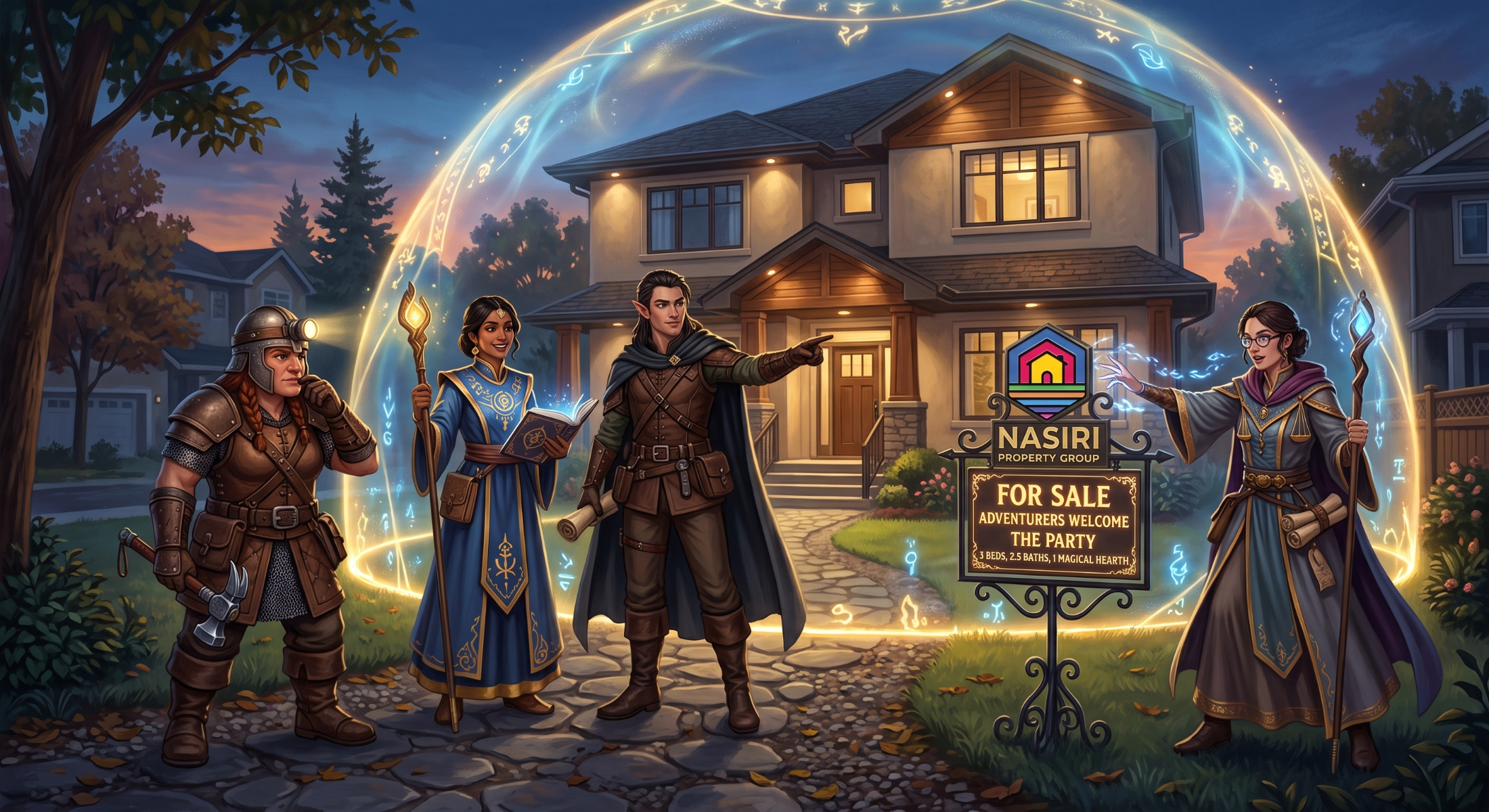
If you’ve ever spent an entire evening arguing over encumbrance limits, debating whether to split the party (never split the party), or rolling a critical fail on a perception check (you didn't notice the wet spot on the ceiling), then you already possess the core skills needed to buy a house in today's market.
Seriously. Acquiring real estate is the ultimate quest. It requires strategy, resource management, teamwork, a resilient liver, and the ability to pivot when you unexpectedly encounter a major hazard, like a low-ceiling basement that attacks your height requirement.
Here is why your real estate journey is the ultimate tabletop campaign, and how to build the perfect adventuring party to defeat the final boss: the dreaded Closing Day.
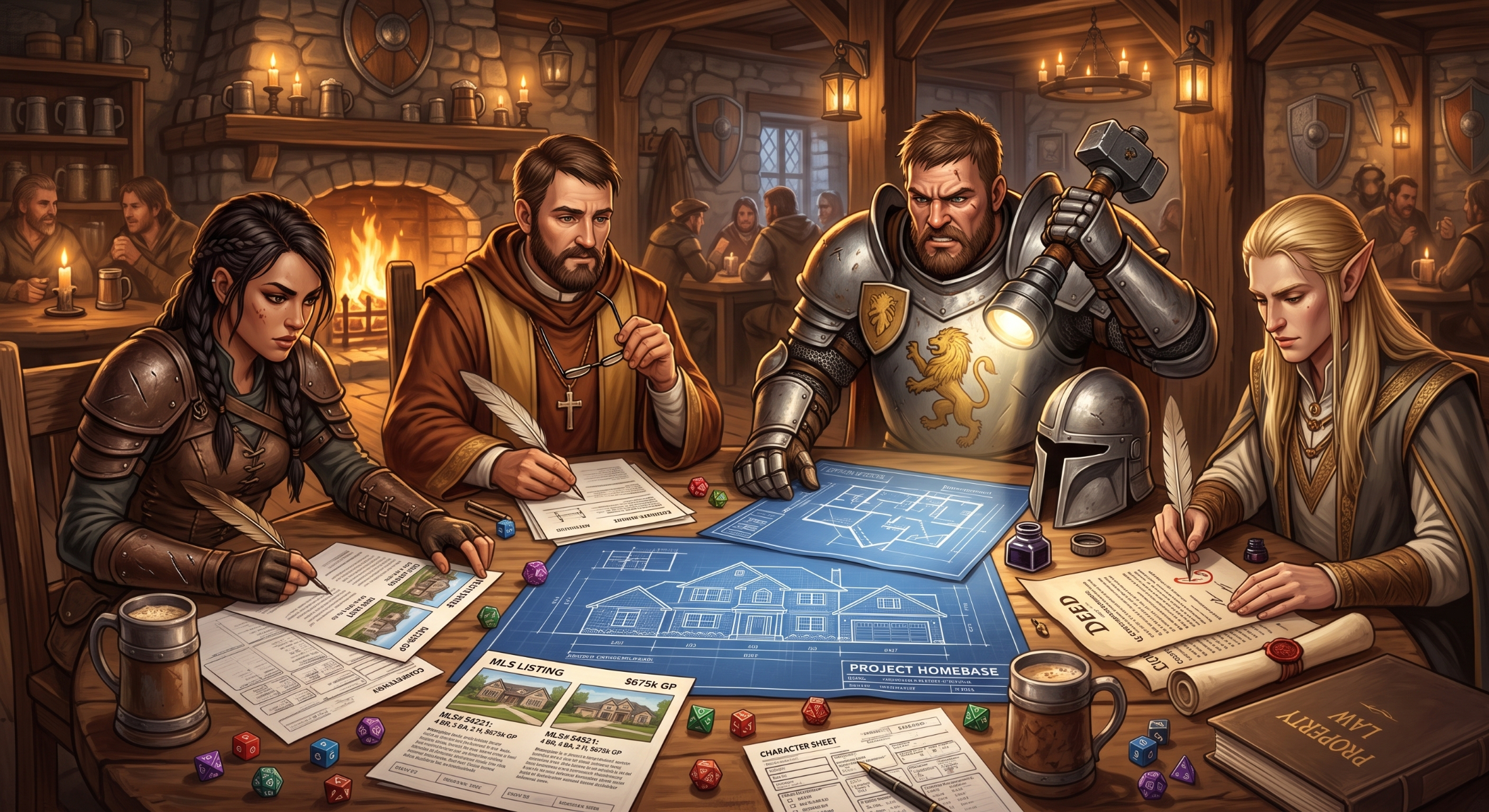
1. The Mortgage Broker (The Party Cleric)
You need healing. Specifically, your bank account needs healing. The Broker is your party Cleric. When the initial costs of the campaign try to deplete your vitality, they cast "Financial Restoration" and provide you with the most crucial spell in the game: Pre-Approval. They tell you exactly how much 'health' (budget) you have and make sure your campaign doesn't bleed out before you reach the final level.
2. The Real Estate Agent (The Party Ranger/Rogue/Bard)
This is your guide, the experienced Multi-Class Ranger/Ranger/Bard who knows the treacherous terrain of the Calgary quadrant. They spot "hidden traps" (bad flips), have a high perception skill for seeing through "illusions" (creative staging), and possess the charisma to negotiate successfully with hostile NPCs (Sellers and their Representatives). If there’s a secret door (a pocket listing), they’re the one who finds it.
3. The Home Inspector (The Party Paladin/Dwarf)
This is your tank. The Home Inspector wields a flashlight and a thermal camera like a blessed warhammer. They have a passive "Detect Evil" ability that works exclusively on plumbing, electrical panels, and foundations. Their job is to crawl into the darkest, spider-infested spaces to ensure there are no ancient curses (asbestos) or slumbering demons (black mold) waiting to doom your party.
4. The Real Estate Lawyer (The Party Wizard/Scribe)
You need someone who can read the ancient, forbidden texts known as the Title and Real Property Report. The Lawyer is your high-level Wizard/Scribe. They decipher the complex magical runes, identify dangerous magical wards (easements), and cast protective spells to prevent ancient spirits (liens) from haunting your ownership. When the final encounter demands signing a hundred magically binding scrolls, the Wizard-Lawyer handles the mana expenditure.
Phase 2: The Quest Board (Scrolling the Listings)
This is the point in the campaign where you sit in the local tavern (your couch at 11:30 PM), drink copious amounts of ale (coffee), and stare at the quest board (your phone). You are looking for main quests ("3 Bedroom Bungalow") while trying to avoid obvious traps ("Charming fixer-upper!" usually translates to: "Currently on fire, enter at own risk").
Phase 3: The Dungeon Crawl (Showings)
You’ve accepted the quests. Now, the dungeon crawl begins.
Walking into an a showing is unpredictable. You may find yourself exploring a magnificent palace (a newly renovated infill), or you might open a basement door and feel a sense of dread that suggests the current owners are cultivating a portal to the abyss.
During the crawl, your entire party’s perception is active. You are searching for treasure (a well-maintained furnace, a sunny south-facing yard) while your Paladin-Inspector rolls saving throws against hazards (bizarre DIY electrical work, a crack in the foundation large enough to swallow a goblin).
This is also where the DM (market conditions) loves to surprise you with a 'Random Encounter.' You arrive at a quaint 3-bedroom, only to find twenty other adventuring parties (buyers) waiting outside. Now it's a dungeon race.
Phase 4: Rolling for Initiative (The Offer)
You found it. The Home Base. The Sanctum. Your Cleric confirms you have the gold, and your Ranger confirms the location is viable. It’s time to strike.
Writing an offer is pure combat strategy. The market usually dictates whether you get a surprise round.
Are you fighting in a Buyer's Market? Congratulations, you have advantage on your attack rolls, and you can add modifiers like property inspection conditions.
Are you fighting in a Seller's Market? You just rolled initiative, but the dragon (the seller) automatically goes first, and they roll with advantage.
Your Ranger/Bard (Realtor) now uses their 'Charisma' skill to charm the seller, and you roll the die. A multiple-offer scenario is essentially rolling a natural 20 or natural 1. You either win the dungeon, or you limp back to the tavern to heal.
Phase 5: The Boss Battle (Clearing Conditions)
You thought getting the offer accepted was the final boss? Oh, sweet summer child. That was just the mini-boss. Now you enter the most perilous, high-stakes stage of the campaign: the Condition Period.
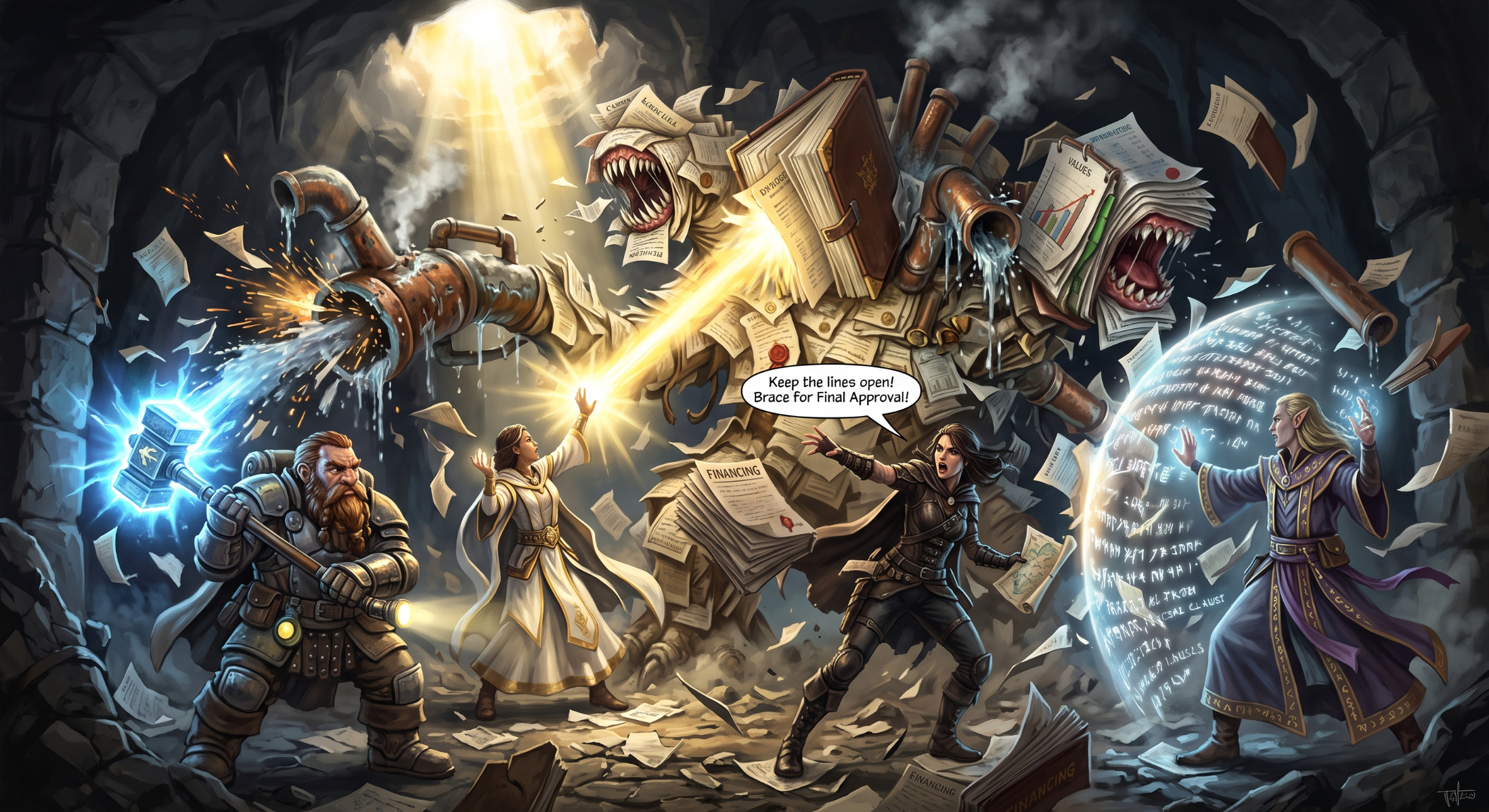
This is an all-out, timed boss battle where the countdown clock is ticking (usually 7 to 10 days) and every member of your party must deploy their ultimate abilities at the exact right moment to survive.
Here is how the battle breaks down:
The Paladin (Inspector) Charges In: The Inspector descends alone into the dungeon (the crawlspace and attic) to battle the elemental forces of moisture, structural integrity, and faulty wiring. They return with a detailed battle report of every weakness the house possesses, allowing the party to decide if the boss is too dangerous to fight, or if they need to negotiate for a potion of repair.
The Cleric (Mortgage Broker) Channels the Bank Gods: While the Inspector fights physical demons, the Broker fights financial ones. They are relentlessly chanting the sacred incantations of "Income Verification" and "Appraisal Approvals," communing with the notoriously fickle Bank Overlords to secure the holy seal of unconditional financing before the clock strikes zero.
The Wizard (Lawyer) Dispels the Curses: The Lawyer steps in to pore over the ancient texts of Condo Documents, Real Property Reports, and Titles. They are actively casting "Dispel Magic" on any hidden covenants, unpaid property taxes, or encroaching fence lines that threaten to place a permanent curse on your future dominion.
The Bard/Rogue/Ranger (Realtor) Manages Aggro: Your Real Estate Associate is the battlefield commander. While the rest of the party is deep in their respective fights, the Realtor handles the backend chaos. They are dodging area-of-effect attacks (delays from the lender), constantly communicating with the seller's guild (listing agent), renegotiating the terms based on the Paladin's inspection report, and keeping the entire party buffed and synchronized so no one misses a deadline.
If anyone fails their saving throw during this phase, the deal collapses and the party is wiped. But if everyone executes their role flawlessly? You sign the waiver, remove the conditions, and the boss is finally defeated.
Phase 6: Claiming the Loot (Closing Day)
You survived the battle. The conditions are cleared, the title is pristine, and the funds have been magically transferred. You’ve already gathered at the Wizard’s tower (the lawyer’s office) to sign the final binding scrolls. You meet your Multi-Classed Realtor at the Sanctum and are handed the ultimate, legendary loot: The Keys.
Sure, your gold reserves are lower now, and your party members all need to take a long rest. But you’ve done it. You leveled up from "Buyer" to "Homeowner."
Now comes the real challenge: managing the encumbrance limits of your moving boxes!
Comments:
Post Your Comment: