RSS

From the Court to the Cul-de-Sac: How Community Sports Shape a Neighborhood

When you're shopping for a home, it is easy to get caught up in the property lines, the square footage, and whether or not the kitchen has that highly coveted gas range. But once the moving boxes are recycled and the new paint is dry, the actual value of where you live is often determined by what happens outside your front door.

If you want to know the true heartbeat of a neighborhood, don't look at the property taxes. Look at the local rec centers on a Saturday morning.

Community sports are the unsung heroes of real estate. Here is why the local soccer fields, basketball courts and flag football fields do more for your property value and your quality of life than any kitchen renovation ever could.

1. The Sideline Syndicate (Where the Real Networking Happens)

You can live next to someone for five years and never learn their last name if your only interaction is a polite nod while taking out the trash. But the moment you find yourself standing on the sidelines at Seton South Field, holding a lukewarm coffee and shivering through a brisk spring morning, you are instantly bonded.

Youth sports force us out of our living rooms and into the community. Whether we’re cheering on our daughter as she drives down the basketball court or trying to run a cohesive flag football practice for our son and his teammates, the sidelines are where the neighborhood actually gets built. It’s where you find out which local mechanic to trust, who the best plumber is, and which houses are secretly getting ready to hit the market.

2. Proximity to Play (The Amenity Premium)

When buyers ask us to evaluate a neighborhood, one of the first things we look at is the proximity to major community hubs.

Having access to top-tier facilities like the Seton YMCA doesn't just give you a place to work out; it creates a gravitational pull for families. Homes located within walking distance or a short drive to comprehensive rec centers, well-maintained fields, and community rinks historically hold their value better and sell faster. Buyers are completely willing to pay a premium for the convenience of not having to commute forty-five minutes across the city just to get to a 7:00 AM practice.

3. The Volunteer Fabric

A neighborhood is only as strong as the people willing to invest their time into it. Anyone who has ever stepped up to coach a youth sports team knows it is roughly 10% tactical strategy and 90% trying to herd highly energetic cats.

It takes a village and usually a dedicated coach to help keep the chaos in check to run these leagues. But that volunteer spirit bleeds into the rest of the community. Areas with high participation in local sports leagues tend to have more active community associations, better-maintained parks, and a stronger collective voice when it comes to city planning and neighborhood safety. When people invest in the kids, they are inherently investing in the neighborhood.

4. The Cul-de-Sac Carryover

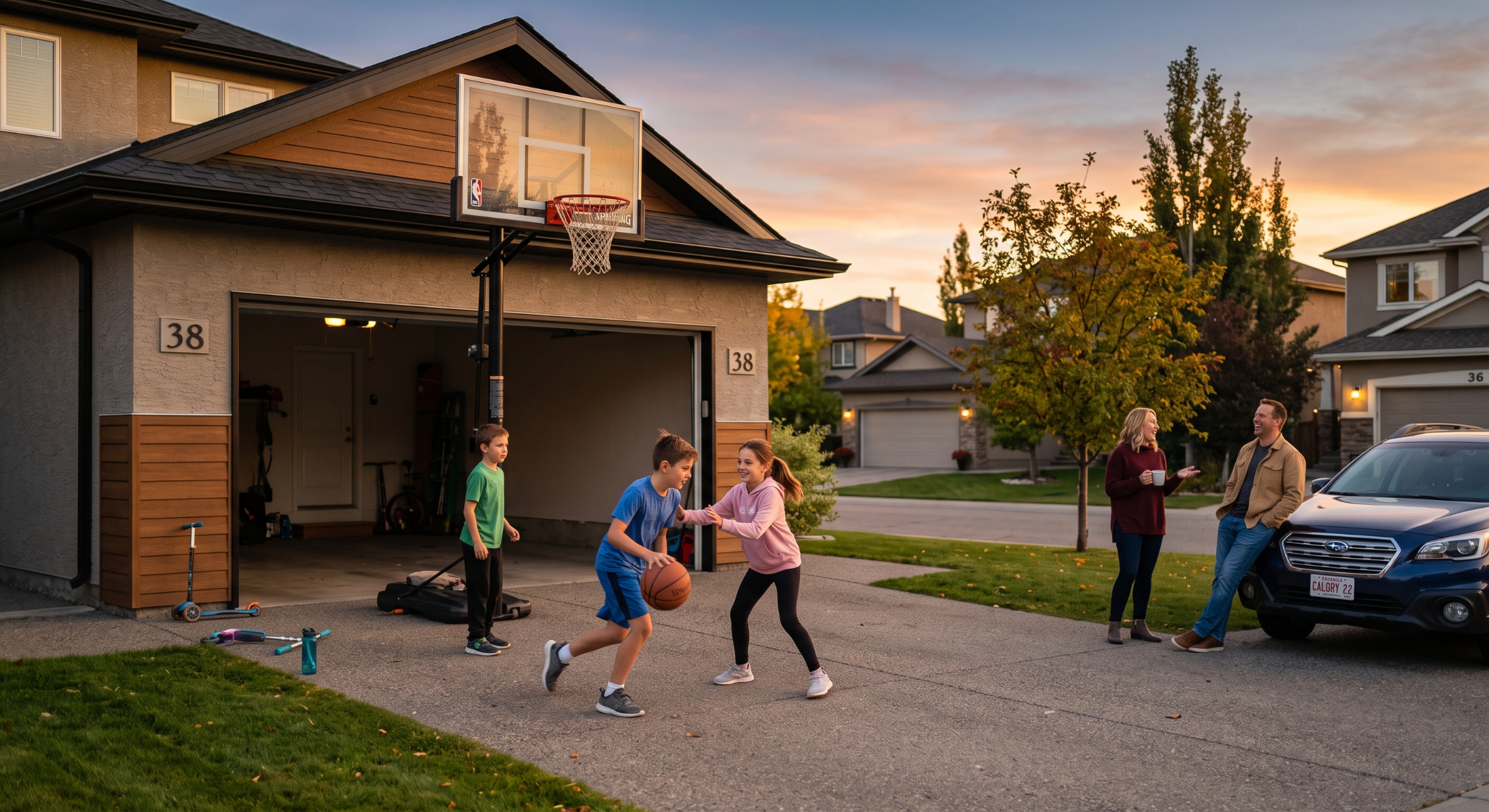
The beautiful thing about community sports is that the game rarely ends when the final whistle blows. It carries over. The kids who meet on the flag football team end up riding their bikes together after school. The driveway basketball hoop becomes a central gathering spot for the entire block. Suddenly, your street isn't just a row of houses; it’s an active, vibrant environment where neighbors actually look out for one another.

The Final Whistle

When you are hunting for your next home, take a drive through the community on a weekend. Look for the crowded soccer fields, the busy basketball courts, and the packed rec center parking lots.

Those aren't just signs of traffic; they are signs of life. And when it comes to making a long-term investment in your family's happiness, a vibrant, connected community is the ultimate home-court advantage.

Read

Paws and Property: A Dog-Lover’s Guide to Calgary Real Estate

Calgary is genuinely one of the most dog-friendly cities you can live in, boasting over 160 public off-leash areas for our four-legged friends to enjoy. But finding the right house when you have a dog requires an entirely different lens.

When your mornings involve wrangling a high-energy puppy down the beautiful Cranston Ridge trail, you quickly realize that a house isn't just a living space for you. It's an indoor dog park that you happen to pay a mortgage on.

If you are house-hunting with a canine companion in mind, here is what you actually need to look for to keep your sanity, your deposit, and your floors intact.

1. The Scratch Factor (Flooring is Everything)

We all love the look of original, pristine hardwood floors. Do you know who else loves them? Your dog, right before they get the "zoomies" and do a full four-paw burnout around your kitchen island.

When touring homes, pay close attention to the flooring.

  • Luxury Vinyl Plank (LVP): This is the holy grail for pet owners. It is waterproof, highly scratch-resistant, and looks almost identical to real wood.

  • Tile: Great for entryways and bathrooms, and it gives your dog a cool place to sleep during those hot Calgary summers.

  • Carpet: If a house is wall-to-wall white carpet, you either need to budget for an immediate renovation, or budget for a professional carpet cleaner to move in with you.

2. The Decontamination Zone (Mudrooms and Dog Washes)

Spring in Calgary means melting snow, which inevitably means mud. Without a proper drop zone, your dog will bring the entire outdoors into your living room.

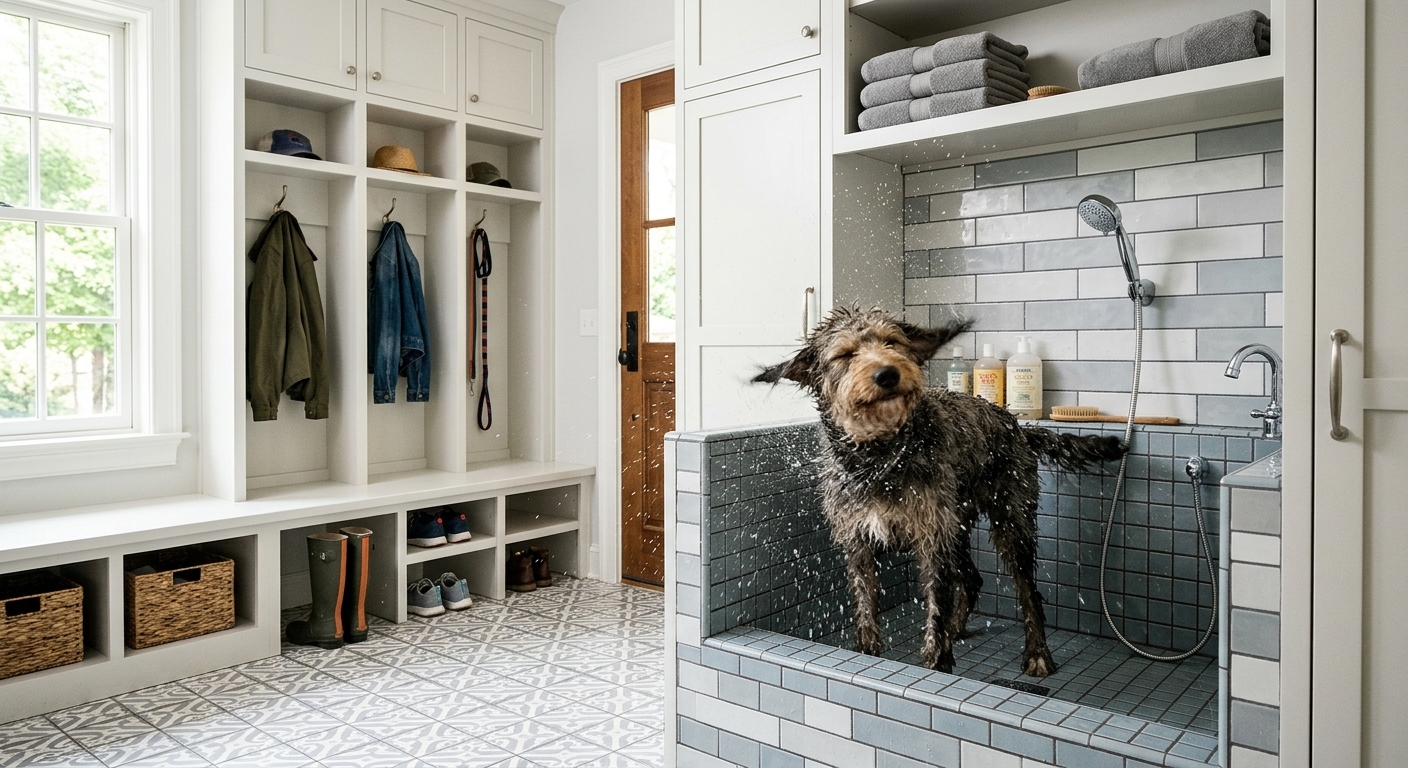
A dedicated mudroom is a massive selling feature for pet owners. Even better? A house with a built-in dog washing station in the mudroom or garage. Having a space with a tiled floor, a floor drain, and a handheld shower nozzle where you can hose off the grime before your dog jumps on the couch is a luxury that will change your life. If a house doesn't have one, look for utility rooms or spacious entryways that have the plumbing potential to add one later.

3. The Perimeter Defense (Fencing)

A "fully fenced yard" in a listing description can mean a lot of things. To a dog owner, it means peace of mind. But you need to inspect the perimeter.

Is it a sturdy, six-foot solid wood or vinyl fence, or is it a four-foot chain-link fence that your athletic Husky will view as a minor hurdle? Look for gaps under the fence line, broken boards, or latching issues on gates. If the yard isn't properly secured, factor the cost of upgrading the fence into your initial buying budget.

4. Location, Location, Location (Proximity to the Parks)

A massive backyard is great, but nothing beats living near an incredible off-leash park or pathway system. Calgary has some of the largest off-leash provisions in North America. Finding a neighborhood that matches your dog's energy level is just as important as the house itself:

  • For the Social Butterfly: If you buy in South Calgary, you might want to be near Sue Higgins Park. It features 62 hectares of space and is the largest fenced off-leash area in the city, complete with Bow River access.

  • For the Endless Explorer: Homebuyers in the Northwest are drawn to Nose Hill Park. With 11 square kilometers of native prairie grassland and sweeping trails, it is perfect for high-energy dogs that love a long hike.

  • For the Family Pack: Southeast neighborhoods like Auburn Bay offer fantastic local off-leash spaces and pathways that are perfect for evening strolls with the family and the dog in tow.

The Final Verdict

Buying a home with your dog in mind doesn't mean sacrificing your own style or comfort. It just means prioritizing durable finishes, smart layouts, and a neighborhood that supports your daily routine. Because at the end of the day, when you're relaxing in your new living room and your exhausted, happy dog is asleep at your feet, you'll know you made the right move. Even if they did track a little bit of mud onto the rug.

Ready to Find Your Dog’s Dream Home?

If you're looking for a property that checks all the boxes for both your family and your four-legged best friend, reach out to the Nasiri Property Group today. Whether you need a massive, secure yard or a mudroom built to handle the Calgary spring thaw, we’re here to help you navigate the market and find the perfect fit. We know exactly what pet owners need to look for and Meg (our Doodle) is always happy to give our favorite local trail recommendations two paws up.

Read

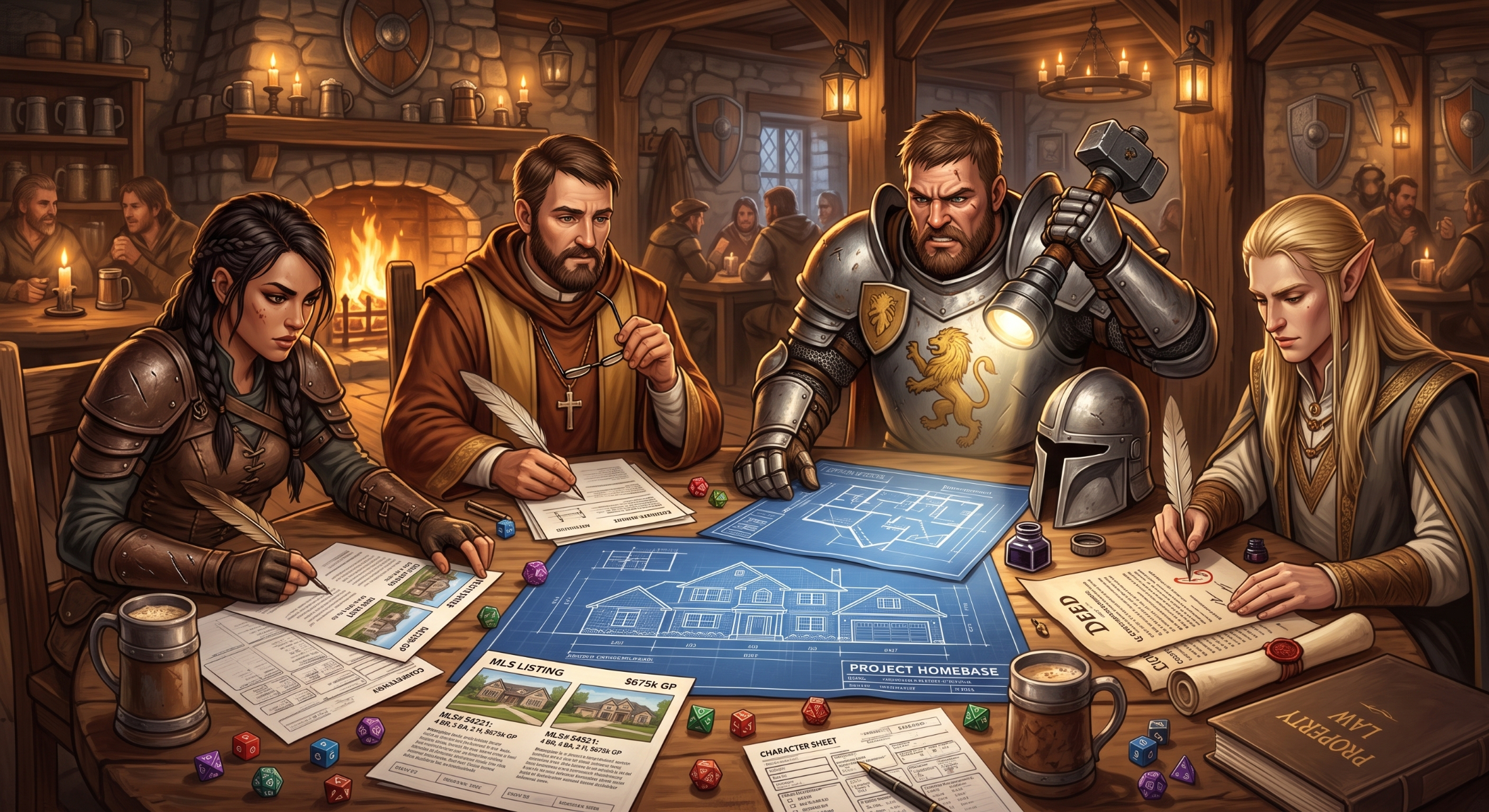
The Homebuyer’s Quest: Why House Hunting is Basically a Tabletop Adventure

If you’ve ever spent an entire evening arguing over encumbrance limits, debating whether to split the party (never split the party), or rolling a critical fail on a perception check (you didn't notice the wet spot on the ceiling), then you already possess the core skills needed to buy a house in today's market.

Seriously. Acquiring real estate is the ultimate quest. It requires strategy, resource management, teamwork, a resilient liver, and the ability to pivot when you unexpectedly encounter a major hazard, like a low-ceiling basement that attacks your height requirement.

Here is why your real estate journey is the ultimate tabletop campaign, and how to build the perfect adventuring party to defeat the final boss: the dreaded Closing Day.

1. The Mortgage Broker (The Party Cleric)

You need healing. Specifically, your bank account needs healing. The Broker is your party Cleric. When the initial costs of the campaign try to deplete your vitality, they cast "Financial Restoration" and provide you with the most crucial spell in the game: Pre-Approval. They tell you exactly how much 'health' (budget) you have and make sure your campaign doesn't bleed out before you reach the final level.

2. The Real Estate Agent (The Party Ranger/Rogue/Bard)

This is your guide, the experienced Multi-Class Ranger/Ranger/Bard who knows the treacherous terrain of the Calgary quadrant. They spot "hidden traps" (bad flips), have a high perception skill for seeing through "illusions" (creative staging), and possess the charisma to negotiate successfully with hostile NPCs (Sellers and their Representatives). If there’s a secret door (a pocket listing), they’re the one who finds it.

3. The Home Inspector (The Party Paladin/Dwarf)

This is your tank. The Home Inspector wields a flashlight and a thermal camera like a blessed warhammer. They have a passive "Detect Evil" ability that works exclusively on plumbing, electrical panels, and foundations. Their job is to crawl into the darkest, spider-infested spaces to ensure there are no ancient curses (asbestos) or slumbering demons (black mold) waiting to doom your party.

4. The Real Estate Lawyer (The Party Wizard/Scribe)

You need someone who can read the ancient, forbidden texts known as the Title and Real Property Report. The Lawyer is your high-level Wizard/Scribe. They decipher the complex magical runes, identify dangerous magical wards (easements), and cast protective spells to prevent ancient spirits (liens) from haunting your ownership. When the final encounter demands signing a hundred magically binding scrolls, the Wizard-Lawyer handles the mana expenditure.

Phase 2: The Quest Board (Scrolling the Listings)

This is the point in the campaign where you sit in the local tavern (your couch at 11:30 PM), drink copious amounts of ale (coffee), and stare at the quest board (your phone). You are looking for main quests ("3 Bedroom Bungalow") while trying to avoid obvious traps ("Charming fixer-upper!" usually translates to: "Currently on fire, enter at own risk").

Phase 3: The Dungeon Crawl (Showings)

You’ve accepted the quests. Now, the dungeon crawl begins.

Walking into an a showing is unpredictable. You may find yourself exploring a magnificent palace (a newly renovated infill), or you might open a basement door and feel a sense of dread that suggests the current owners are cultivating a portal to the abyss.

During the crawl, your entire party’s perception is active. You are searching for treasure (a well-maintained furnace, a sunny south-facing yard) while your Paladin-Inspector rolls saving throws against hazards (bizarre DIY electrical work, a crack in the foundation large enough to swallow a goblin).

This is also where the DM (market conditions) loves to surprise you with a 'Random Encounter.' You arrive at a quaint 3-bedroom, only to find twenty other adventuring parties (buyers) waiting outside. Now it's a dungeon race.

Phase 4: Rolling for Initiative (The Offer)

You found it. The Home Base. The Sanctum. Your Cleric confirms you have the gold, and your Ranger confirms the location is viable. It’s time to strike.

Writing an offer is pure combat strategy. The market usually dictates whether you get a surprise round.

Are you fighting in a Buyer's Market? Congratulations, you have advantage on your attack rolls, and you can add modifiers like property inspection conditions.

Are you fighting in a Seller's Market? You just rolled initiative, but the dragon (the seller) automatically goes first, and they roll with advantage.

Your Ranger/Bard (Realtor) now uses their 'Charisma' skill to charm the seller, and you roll the die. A multiple-offer scenario is essentially rolling a natural 20 or natural 1. You either win the dungeon, or you limp back to the tavern to heal.

Phase 5: The Boss Battle (Clearing Conditions)

You thought getting the offer accepted was the final boss? Oh, sweet summer child. That was just the mini-boss. Now you enter the most perilous, high-stakes stage of the campaign: the Condition Period.

This is an all-out, timed boss battle where the countdown clock is ticking (usually 7 to 10 days) and every member of your party must deploy their ultimate abilities at the exact right moment to survive.

Here is how the battle breaks down:

  • The Paladin (Inspector) Charges In: The Inspector descends alone into the dungeon (the crawlspace and attic) to battle the elemental forces of moisture, structural integrity, and faulty wiring. They return with a detailed battle report of every weakness the house possesses, allowing the party to decide if the boss is too dangerous to fight, or if they need to negotiate for a potion of repair.

  • The Cleric (Mortgage Broker) Channels the Bank Gods: While the Inspector fights physical demons, the Broker fights financial ones. They are relentlessly chanting the sacred incantations of "Income Verification" and "Appraisal Approvals," communing with the notoriously fickle Bank Overlords to secure the holy seal of unconditional financing before the clock strikes zero.

  • The Wizard (Lawyer) Dispels the Curses: The Lawyer steps in to pore over the ancient texts of Condo Documents, Real Property Reports, and Titles. They are actively casting "Dispel Magic" on any hidden covenants, unpaid property taxes, or encroaching fence lines that threaten to place a permanent curse on your future dominion.

  • The Bard/Rogue/Ranger (Realtor) Manages Aggro: Your Real Estate Associate is the battlefield commander. While the rest of the party is deep in their respective fights, the Realtor handles the backend chaos. They are dodging area-of-effect attacks (delays from the lender), constantly communicating with the seller's guild (listing agent), renegotiating the terms based on the Paladin's inspection report, and keeping the entire party buffed and synchronized so no one misses a deadline.

If anyone fails their saving throw during this phase, the deal collapses and the party is wiped. But if everyone executes their role flawlessly? You sign the waiver, remove the conditions, and the boss is finally defeated.

Phase 6: Claiming the Loot (Closing Day)

You survived the battle. The conditions are cleared, the title is pristine, and the funds have been magically transferred. You’ve already gathered at the Wizard’s tower (the lawyer’s office) to sign the final binding scrolls. You meet your Multi-Classed Realtor at the Sanctum and are handed the ultimate, legendary loot: The Keys.

Sure, your gold reserves are lower now, and your party members all need to take a long rest. But you’ve done it. You leveled up from "Buyer" to "Homeowner."

Now comes the real challenge: managing the encumbrance limits of your moving boxes!

Read

Navigating the Shift: August 2026 Calgary Market Update

Welcome back to our monthly market deep-dive! If you’ve been feeling a slight shift in the air when it comes to Calgary real estate, you aren't imagining it. As we move through August, the frantic pace of previous years is officially easing up.

According to the latest stats from the Calgary Real Estate Board (CREB), July brought us fewer sales and fewer new listings compared to last year. While demand is certainly slower than it was at the peak, it's still stronger than the challenging slump we saw between 2015 and 2019.

The biggest takeaway this month? Calgary is operating as a city of micro-markets. Your experience right now depends entirely on what quadrant you are in and what type of property you are looking for. Supply choice is back, and in higher-density sectors, the ball is increasingly in the buyer's court.

Let's break down exactly what these numbers mean for buyers and sellers across the city and our neighboring communities.

The Big Picture: By the Numbers

Here’s a quick snapshot of where the benchmark prices landed across different property types in Calgary for July 2026:

Property TypeBenchmark PriceYear-Over-Year ChangeMarket Condition
Total Residential$569,200Down 2.0%Balanced (3.5 months supply)
Detached$743,900Down ~2%Balanced (< 3 months supply)
Semi-Detached$691,000Stable / FlatBalanced (< 3 months supply)
Row / Townhouse$418,500Down 6%Shifting to Buyers (~4 months supply)
Apartment Condo$297,600Down >8%Buyers Market (~5 months supply)

The Property Breakdown: District Disparities & Trends

Apartment Condominiums: The Buyer's Domain

The headline story this month belongs to the apartment sector. Several consecutive years of high construction levels have finally caught up with demand, creating a persistent oversupply. Sales have fallen by nearly 26% so far this year, and with over 17,000 apartment-style units currently under construction, recently built resale condos are facing stiff competition.

  • The Details: At $297,600, benchmark prices are down over 8% from last year and a significant 13% below the peak levels we saw in 2024. Inventory is sitting at nearly 5 months of supply.

  • What This Means For You:

    • For Buyers: If you're an investor or a first-time homebuyer, this is where your negotiating power is strongest. You have time to shop around and avoid multiple-offer situations.

    • For Sellers: Pricing and presentation are everything. You are directly competing with brand-new builds, so your unit must stand out online and in person to secure a sale.

Detached Homes: The Tale of Two Cities

Sales of detached homes dipped slightly, but sellers aren't exactly panicking. A corresponding pullback in new listings has kept the overall market balanced. However, the citywide numbers mask a stark district divide.

  • The Details: The unadjusted benchmark price sits at $743,900. While we've eased off the peak prices of 2025, the market hasn't erased the massive equity gains homeowners have seen over the past few years.

  • The District Split: The West District and City Centre are still seeing price improvements (with the West sitting tight at under two months of supply). Conversely, the steepest declines have occurred in the North East, where prices have dropped nearly 6% and conditions have shifted toward a buyer's market with over five months of supply.

  • What This Means For You:

    • For Buyers: Expand your search to the North and North East if you want more leverage and better pricing on detached homes.

    • For Sellers in the West/Inner City: You still have the upper hand, but buyer fatigue is real. Overpricing will lead to your home sitting on the market.

Semi-Detached: The Steady Middle-Ground

Semi-detached homes are the quiet achievers of the summer. Despite typical monthly slow-downs, year-to-date sales have remained remarkably consistent with 2025.

  • The Details: With a benchmark price of $691,000 and months of supply sitting below three months, this segment remains firmly in balanced territory. Much like detached homes, the West District was the only area to record a year-over-year price gain, while buyers are finding the most traction and price relief in the North East.

  • What This Means For You: This is the most stable segment in Calgary right now. Whether buying or selling, expect a fair, balanced negotiation process without the wild swings seen in other property types.

Row Homes: Easing Pressure & Building Supply

We’re seeing early signs of oversupply in the row housing market. A steep pullback in sales (down 15% year-to-date) pushed the months of supply up to nearly four months.

  • The Details: Increased competition from the new-build market is weighing heavily on resale townhomes, pushing the citywide benchmark price down to $418,500. Again, location dictates the reality: year-to-date price declines range from a sharp 12% drop in the North East and East Districts to a modest 3% decline in the West District.

  • What This Means For You:

    • For Buyers: If you've been priced out of townhomes over the last two years, it's time to start looking again—especially in the East and North East quadrants.

    • For Sellers: You must account for the new developments in your area when setting your list price. Buyers will choose a brand-new build over your resale unit if the prices are too similar.

Regional Market Spotlight

If you're looking outside the city limits, here is how Calgary's surrounding communities fared in July:

  • Airdrie: Sales are trending down, but so are listings. The months of supply sits just below four months, returning the market to a balanced state. The detached benchmark price is $603,100 (down 4% from last year), bringing the price gap between Airdrie and Calgary back to historical norms.

  • Cochrane: Inventory is growing, largely driven by higher-density homes. With supply pushing above four months, prices are feeling the pinch. The detached benchmark price fell to $659,400.

  • Okotoks: The tightest market in the region! Okotoks boasts a high sales-to-new-listings ratio of 90% and a low two months of supply. However, competition from new developments in South Calgary is keeping a lid on price growth, with the detached benchmark easing to $695,700.

  • Chestermere: Buyers have plenty of time to browse here. Supply has pushed to nearly seven months. The additional inventory has driven the detached benchmark price down to $771,900.

The Bottom Line

We are officially transitioning out of the hyper-competitive, frenzy-driven market of the last few years. While new home construction and a dip in international migration have cooled demand, the overarching theme is balance—with some distinct advantages appearing for buyers depending on the quadrant and property type.

Whether you're looking to capitalize on the lower prices in the condo market, or wondering how your specific property stacks up against new construction in your neighborhood, navigating a shifting market requires precise, localized data.

Ready to Make Your Move?

Citywide averages only tell part of the story, what’s happening in your specific community or building can look completely different. Whether you're thinking of selling and need an accurate, hyper-local evaluation of your home’s value, or you're looking to buy and want to capitalize on emerging opportunities in today's shifting market, having tailored data on your side makes all the difference.

Reach out today for a complimentary, customized market report for your neighborhood. Let’s chat about what these numbers mean for your next real estate move!

Read
Data is supplied by Pillar 9™ MLS® System. Pillar 9™ is the owner of the copyright in its MLS®System. Data is deemed reliable but is not guaranteed accurate by Pillar 9™.
The trademarks MLS®, Multiple Listing Service® and the associated logos are owned by The Canadian Real Estate Association (CREA) and identify the quality of services provided by real estate professionals who are members of CREA. Used under license.